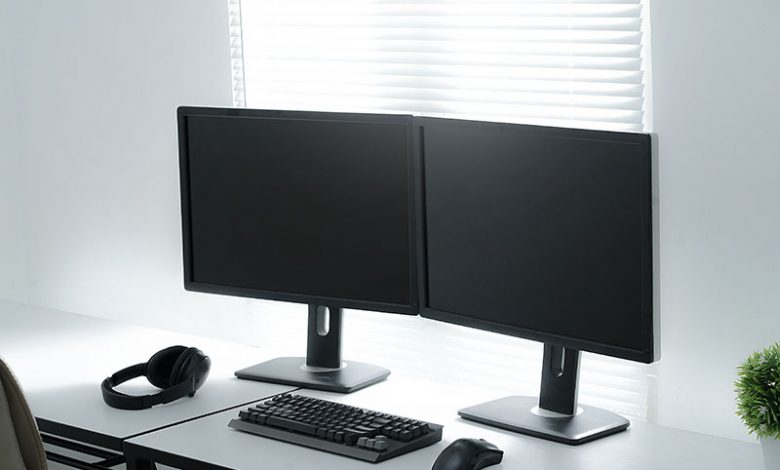
In Windows 10, users can use dual monitors with different resolutions. That gives users more flexibility in their workspaces, making multitasking more accessible and efficient. Users can navigate to Display Settings in the menu by right-clicking on the desktop. Here, you'll find a preview of your configured screens represented as 1 and 2.
Select the monitor you wish to adjust from the preview panel to set different resolutions. After selecting the monitor, navigate to the Scale and Layout section and find the Display resolution drop-down and choose your desired resolution for that individual screen.
Table of Contents
Configuring Dual Monitors with Different Resolutions
Setting up and configuring dual monitors with different resolutions can be done through the display settings in Windows 10. By clicking on Display settings after right-clicking on the desktop, users can see a preview of the currently connected monitors. Each monitor can be selected individually, allowing you to set separate resolutions.
This configuration gives users flexibility in how they use their dual monitors, as they are not required to have the exact resolution on both screens. Whether your monitors naturally have different resolutions or you choose to set them differently, Windows 10 allows this customization.
Managing Mouse Pointer Transition Between Screens
When using dual monitors with different resolutions, managing the transition of the mouse pointer between screens may become an issue. However, Windows 10 provides a feature in the display settings that allows users to arrange their displays to match their physical setup.
Users can click and drag the numbered displays in the preview panel under Display settings to align them with their physical arrangement. This feature provides a smooth transition when moving the cursor between screens, reducing confusion and enhancing productivity. Regardless of the different resolutions on each monitor, this setup ensures a seamless user experience when using dual monitors.
Issues with Different Resolution Monitors
While dual monitors with different resolutions offer flexibility and enhance productivity, specific issues may arise. The movement of the mouse pointer, refresh rate disparities, and managing application windows across two different screens can present challenges.
Understanding how the mouse interacts with screens of varying resolutions
One of the key challenges concerns how the mouse pointer moves from a high-resolution monitor to a lower one. For instance, if you have a 4K monitor and a 1080p monitor, you may need to slide the mouse pointer to the corner of the screen to transition to the lower-resolution monitor. That happens because Windows interprets the screens as two different sizes. Movement from the lower resolution to the higher one often results in the cursor appearing in the corner of the high-resolution monitor, which can be disorienting for users.
Addressing Different Refresh Rates
Another challenge when using dual monitors with different refresh rates is balancing performance. For example, a high-refresh-rate monitor might be capped to a lower rate when performing activities on the other screen. This situation is common when people want to play games on one screen while watching media on the other.
One way to solve this problem is by turning off hardware acceleration in your web browser. For example, you can find this option in Google Chrome under System Settings. By taking these steps, you can maintain the proper refresh rate on your primary monitor without experiencing issues related to dual monitor setup.
Refresh Rate Differences and Solutions
While operating dual monitors with different resolutions, the issue of refresh rate discrepancies may arise. Users may have their screens' high refresh rate reduced during certain operations, which can hinder the display's performance and the overall user experience.
Capped Refresh Rate on a Higher Rate Monitor
Monitors with different resolutions often have different refresh rates as well. When performing various tasks on a dual monitor setup, there could be a noticeable dip in the refresh rate of higher-resolution screens. For instance, you may notice that a monitor with a 144Hz refresh rate caps at 60Hz during specific tasks. That is particularly common when users watch media on one screen while playing a game on the other.
Maintaining Proper Refresh Rate on the Primary Monitor
Despite the challenges, you can maintain the proper refresh rate on your primary monitor by turning off the hardware acceleration feature in your web browser. In Google Chrome, for example, you can navigate to settings, click on 'System' and then uncheck 'Use hardware acceleration when available.' That turns off the feature that may cap the refresh rate of your primary monitor. By doing this, media playback on your secondary monitor won't affect your primary monitor's performance and refresh rate, ensuring uninterrupted and high-quality display at all times.
Changing Resolution Settings for Dual Monitors
Accommodating two monitors with different resolutions may seem complex, but the Windows interface simplifies the process through user-friendly steps. The settings are easily accessible, and you can adjust them to your personal preferences shepherding a seamless dual-monitor experience.
Accessing Resolution Settings on Dual Monitors
To access the resolution settings when utilizing a dual monitor setup, right-click on the desktop and choose 'Display settings.' A preview window will open, showing icons marked 1 and 2 representing both monitors. Users can select either icon and adjust its corresponding resolution without interfering with the other.
Changing Resolution via Display Settings and NVIDIA Control Panel
Once you have selected the monitor of choice, scroll down to the 'Scale and Layout' section. Here, the 'Display resolution' drop-down menu allows for selecting the desired resolution. Remember, any changes affect the chosen screen and leave the other unaltered. This approach ensures that each monitor operates at its preferred resolution.
Moreover, if your system houses an NVIDIA graphics card, you can adopt a similar approach via the 'NVIDIA Control Panel.' Right-click on the desktop and select the 'NVIDIA Control Panel' option. In the new window, under 'Adjust desktop size and position,' pick the monitor you want to be adjusted. Then, scroll down to locate a drop-down menu for the resolution setting where you can select the resolution of your choice.
Adjusting resolution settings for dual monitors is a discernible process, whether via display settings or control panels of specific graphics cards. Following these steps, you can effectively utilize dual monitors with different resolutions, modifying settings according to individual screen requirements and preferences.