
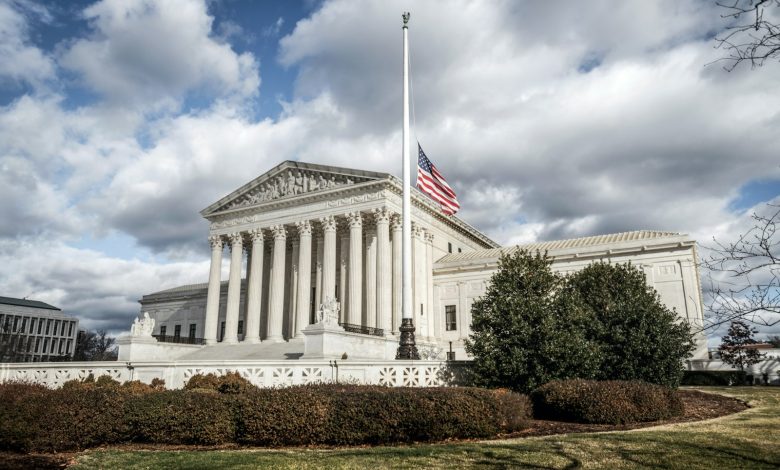
The U.S. Supreme Court declined Monday to immediately lift legal protections for approximately 356,000 migrants from Haiti and Syria. However, the conservative-majority court simultaneously granted the Trump administration’s request to bypass lower appeals courts, setting an expedited hearing for April 2026 to decide if the executive branch has the unreviewable authority to terminate Temporary Protected Status (TPS).
The order in Trump v. Miot and Noem v. Doe signals a pivotal moment for the administration’s broader immigration crackdown. While the ruling provides a temporary reprieve for families, the court’s decision to take the case "before judgment" from the appellate level suggests a desire to establish a definitive nationwide precedent on executive power.
Table of Contents
The Legal Conflict: Executive Discretion vs. Judicial Oversight
The core of the dispute rests on whether the Department of Homeland Security (DHS) can end TPS designations without interference from federal judges.
Under the Immigration and Nationality Act, the DHS Secretary has the power to grant or revoke TPS based on conditions like civil war or natural disasters. The Trump administration argues that these decisions are "committed to agency discretion by law" and are therefore unreviewable by the courts.
When we reviewed the filing by Solicitor General D. John Sauer, we found a sharp emphasis on what the administration calls a "persistent disregard" by lower courts for executive authority. Sauer argued that "hostile" district judges are inflicting "specific harms to the national interest" by freezing policy initiatives through nationwide injunctions.
A Shift in the “Shadow Docket” Strategy
In previous months, the Supreme Court has allowed the administration to proceed with ending protections for roughly 600,000 Venezuelans. This Monday's ruling is notable because it is the first time in President Trump’s second term that the Court has refused an emergency request to immediately lift a stay, opting instead for a full merits review on an accelerated timeline.
In our observation, this shift suggests the Court is seeking to move away from the "emergency docket" (often called the shadow docket) for major policy shifts. By scheduling oral arguments for the second week of April, the justices are forcing a transparent legal debate rather than issuing a summary unsigned order.
Impact on Migrant Communities
For the 350,000 Haitians currently living in the U.S., the stakes involve more than just legal status. Federal Judge Reyes, in a lower court ruling, noted that the administration failed to consider the "billions of dollars" TPS holders contribute to the U.S. economy before moving to terminate the status.
Opponents of the termination, including a coalition of 19 state attorneys general, argue that forcing migrants back to unstable nations like Haiti—currently grappling with severe gang violence—would be "exceedingly dangerous."
Key Dates in the TPS Legal Timeline
-
March 30, 2026: Deadline for the Department of Justice to file opening briefs.
-
April 13, 2026: Deadline for challengers (migrant advocates) to respond.
-
Late April 2026: Oral arguments before the Supreme Court.
-
June 2026: Anticipated final ruling.




Leave a Reply
Thank you for your response.
Please verify that you are not a robot.