
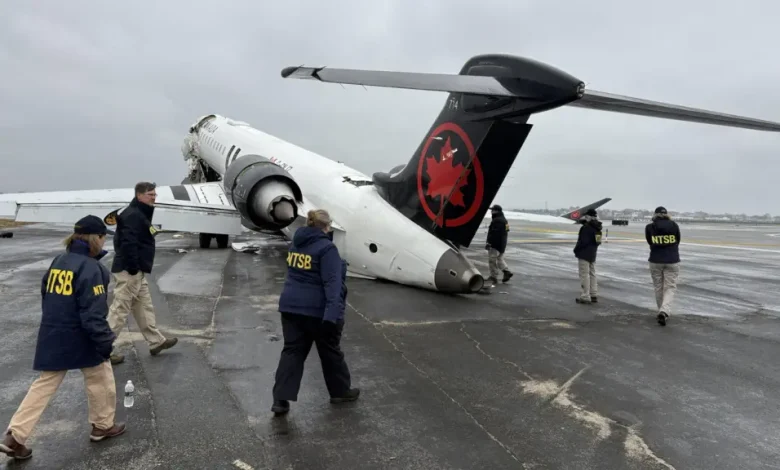
The image of a commercial airliner resting in the gray waters of the East River is one that triggers an immediate, visceral memory for New Yorkers. On Monday, what could have been a repeat of the 2009 "Miracle on the Hudson" occurred near LaGuardia Airport when a diverted flight was forced into an emergency water landing. While the headlines focus on the harrowing rescue of all passengers and crew, the survival of those on board should not distract us from a more pressing, systemic question: Why are these "miracles" becoming a necessary feature of our modern aviation landscape?
Table of Contents
The Unintended Consequences Take: The High Price of “Good Enough”
When we look at the aviation industry today, we see a sector under immense pressure to prioritize speed, volume, and cost-reduction over the rigorous, redundant safety cultures that once made American flight the gold standard of the world. The "Unintended Consequences" of this shift are now landing in our rivers.
We often hear about the "intentions" of modern aviation policy: making travel more accessible, reducing carbon footprints through leaner engine cycles, and streamlining maintenance schedules to keep planes in the air longer. However, the long-term effect of these "efficiencies" is the gradual erosion of the margin for error. When maintenance is outsourced to the lowest bidder or cockpit experience is sacrificed for check-the-box training requirements, the real-world outcome isn't just a cheaper ticket—it’s a higher reliance on the extreme skill of individual pilots to pull off a miracle when the machine fails.
A Reality Check on Aviation Safety
-
The Competency Gap: As seasoned pilots reach mandatory retirement, the industry is rushing to fill seats, often lobbying to reduce the required flight hours for new First Officers.
-
Maintenance Mirages: Modern "predictive maintenance" is a marvel of tech, but it cannot replace the physical, hands-on oversight of a dedicated local hangar crew.
-
The Bottom Line: We are rewarding "on-time performance" statistics while punishing the slow, methodical caution that prevents engine failures in the first place.
The Steel-Man: The Case for Rapid Innovation
A reasonable observer might argue that modern aviation is statistically safer than it has ever been. Proponents of the current system would point out that despite an increase in "close calls," the actual hull-loss rate remains incredibly low thanks to advanced cockpit automation and better air traffic control technology. They would argue that the industry must evolve to meet global demand and that the occasional mechanical failure is a statistical inevitability of operating thousands of flights a day, not a sign of systemic rot. In this view, the emergency landing at LaGuardia is actually a success story—proof that our safety systems (and our pilots) are robust enough to handle the worst-case scenario.
However, relying on a pilot’s "heroism" to fix a "systemic" failure is a dangerous gamble. True safety isn't found in the ability to survive a crash; it’s found in the institutional discipline that ensures the crash never happens.
Why This Matters to the Community
Aviation isn't just about the people in the pressurized tube; it’s about the communities over which they fly. For the neighborhoods surrounding LaGuardia, a plane in the water is a reminder of the thin line between a routine Monday and a local catastrophe.
When we centralize aviation authority and allow massive carriers to dictate safety norms, we lose the local accountability of the regional hubs. We have traded the "Heritage" of American craftsmanship and engineering pride for a globalized model of "just-in-time" logistics. We must return to a standard where "zero-fail" isn't a marketing slogan, but a moral mandate.
The Smarter Path Forward
The solution isn't more federal bureaucracy or layers of red tape that only the biggest airlines can afford to navigate. Instead, we need a return to meritocratic excellence and institutional responsibility.
-
Prioritize Human Capital: We must stop viewing pilots and mechanics as replaceable "inputs" and start treating them as the final, most critical layer of national infrastructure. This means protecting high training standards and rewarding experience over seniority or diversity quotas.
-
Decentralize Maintenance: Encouraging airlines to maintain "home-base" mechanical crews rather than outsourcing to third-party international firms restores a sense of personal responsibility to the people turning the wrenches.
-
The "Safety First" Incentive: We should shift the regulatory focus from punishing errors after they happen to rewarding carriers that maintain a "culture of dissent," where any employee can stop a launch for a safety concern without fear of professional reprisal.
We should be grateful today for the lives saved, but we must be firm in demanding an industry that doesn't require a miracle to get us home.





Leave a Reply
Thank you for your response.
Please verify that you are not a robot.