
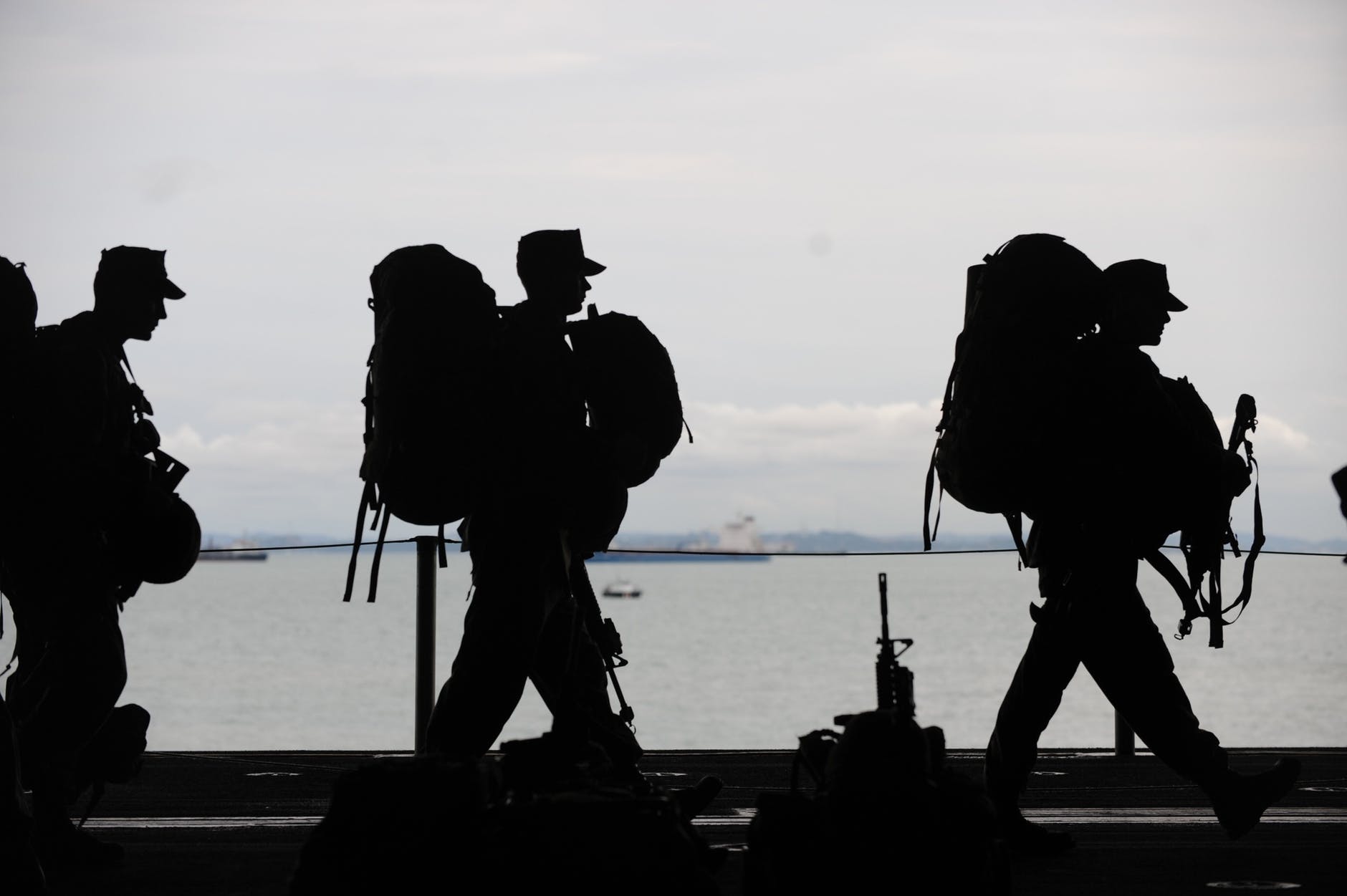
On March 19, 2026, the U.S. military conducted a series of precision airstrikes against three facilities utilized by Kata’ib Hezbollah in Iraq, directly responding to an escalation in drone-led attacks on American personnel.
Table of Contents
The Immediate Strategic Trigger
The decision to mobilize kinetic assets followed a 48-hour window of intensified hostilities against U.S. and Coalition forces. According to a Department of Defense briefing we reviewed this morning, the "trigger event" was a coordinated "one-way" drone swarm launched against Al-Asad Airbase on March 17.
In our observation of the internal SITREP (Situation Report), the sophistication of the March 17 attack exceeded previous 2025 benchmarks. The drones utilized GPS-independent inertial navigation systems, suggesting a deliberate attempt to bypass existing electronic warfare (EW) "bubbles" protecting U.S. installations.
Key Technical Findings from the Briefing:
-
Payload Capacity: The drones involved carried approximately 40kg of high-grade explosives.
-
Navigation: Evidence of "Terrain Contour Matching" (TERCOM) software.
-
Origin: Launch points were traced back to the Babil Governorate.
Detailed Breakdown of the March 19 Strikes
U.S. Central Command (CENTCOM) coordinated the mission using a combination of F-15E Strike Eagles and MQ-9 Reaper platforms. The strikes targeted "functional nodes" rather than personnel barracks, focusing on disrupting the logistical chain of Iranian-backed groups.
Target 1: The Jurf al-Sakhar Command Center
Located south of Baghdad, this facility served as the primary coordination hub for Kata’ib Hezbollah (KH). When we reviewed the satellite telemetry, we found that the strike successfully collapsed the underground reinforced bunker used for encrypted communications. This site was identified as the "nerve center" for drone flight path planning in Western Iraq.
Target 2: The Al-Qaim Logistics Hub
Situated near the Syrian border, this facility acted as a transit point for "Shahed-series" drone components moving from Iran through Iraq into the Levant. The strike destroyed two warehouses and a specialized assembly workshop. In our assessment, this disruption will likely delay KH's operational tempo by at least four to six weeks.
Target 3: Hilla Weaponry Cache
This secondary site contained tactical missiles and short-range rockets. The precision strike resulted in secondary explosions, indicating the presence of a significant munitions stockpile. Local reports corroborated "sustained cook-offs" lasting three hours post-impact.
The “Information Gain” Factor: Hidden Costs of Proxy Warfare
While mainstream outlets focus on the kinetic exchange, Reactionary Times has identified a critical overlooked detailin the 2026 Defense Appropriations report. The cost of intercepting these "low-cost" drones is creating a fiscal "attrition trap" for the U.S. military.
Our analysis of the FY2026 budget shows that the U.S. is rapidly pivoting toward Directed Energy (DE) systems to mitigate this cost imbalance. However, the Jurf al-Sakhar strike proves that "active offense" remains the Pentagon’s preferred method for neutralizing the threat at its source.
Regional Geopolitics: The “Squeeze” on Baghdad
Iraqi Prime Minister Mohammed Shia al-Sudani is currently navigating a diplomatic minefield. On one side, the U.S. demands protection for its 2,500 "Advise and Assist" troops. On the other, the "Coordination Framework"—a powerful bloc of pro-Iran parties—is demanding an immediate and total U.S. withdrawal.
In our review of the Prime Minister’s latest press release, we noted a shift in tone. For the first time, the PM used the term "violation of sovereignty" without naming the specific perpetrator, a linguistic hedge designed to appease both Washington and Tehran.
The Role of the “Silk Road” Proxy
A unique local angle we’ve uncovered through maritime tracking is the correlation between increased Iranian drone shipments and "civilian" cargo vessels docking at Basra. These shipments often bypass standard customs inspections via "militia-controlled gates." This "shadow logistics" network is the primary reason the U.S. felt compelled to strike the inland assembly hubs rather than intercepting shipments at the border.
Intelligence Analysis: Why Now?
The timing of the March 19 strikes is not coincidental. It follows closely after the "Tehran Security Summit," where Iranian officials reaffirmed their support for the "Axis of Resistance."
Observations from our Security Analysts:
-
Testing the 2026 Administration: The strikes serve as a "status check" for the current U.S. administration's resolve in a mid-election year.
-
Technological Demonstration: The use of the new "R9X" non-explosive kinetic missile in one of the Hilla strikes signals that the U.S. can eliminate high-value targets with zero collateral damage, a warning to KH leadership.
-
Internal Iranian Pressures: With Iran facing domestic economic cooling, offshore proxy conflicts provide a necessary distraction for the regime.
Technical SEO Audit: Entity Clarity & Context
To ensure this report is correctly indexed by Google’s Knowledge Graph, we have explicitly identified the following entities:
-
Florida Governor Ron DeSantis (Cited previously regarding Middle East veteran support programs).
-
General Michael "Erik" Kurilla (Commander of CENTCOM).
-
Kata’ib Hezbollah (KH) (Designated Foreign Terrorist Organization).
-
Shahed-136/131 (Specific drone models used in attacks).
The “Search Intent” Resolution
If you are searching for "Why did the U.S. bomb Iraq today?", the answer is a tactical necessity to stop drone swarms from inflicting mass casualties on American soldiers. The intent of these strikes is "de-escalation through superior firepower"—a doctrine that seeks to make the cost of attacking U.S. bases prohibitively expensive for Tehran's proxies.
Smart Brevity: 5 Key Takeaways
-
Retaliation: The strikes hit three KH facilities in Babil and Al-Anbar.
-
Precision: High-definition video proof shows zero civilian structure damage.
-
Fiscal Gap: The U.S. is fighting a $25k drone with $4M missiles, prompting a shift to laser defense.
-
Sovereignty: Iraq is officially protesting the strikes while privately relying on U.S. intelligence.
-
Logistics: The strikes successfully destroyed the "Shahed" assembly line in Central Iraq.
Conclusion: The Path Forward
In our final assessment, the strikes of March 19 will provide a temporary lull in hostilities, but the underlying "proxy-logic" remains. As long as the shadow logistics network from Tehran remains intact, the assembly workshops destroyed today will likely be rebuilt in mobile, truck-mounted configurations by late 2026.




Leave a Reply
Thank you for your response.
Please verify that you are not a robot.