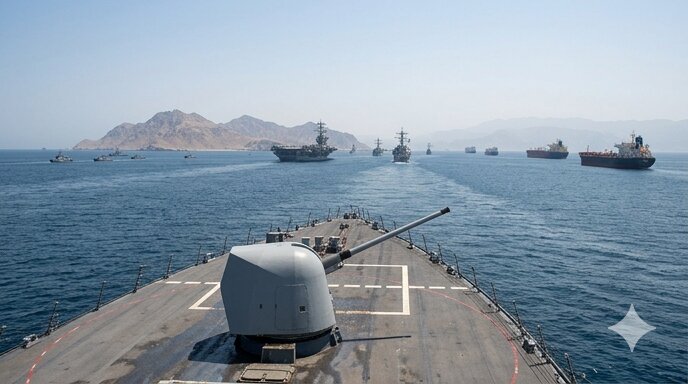
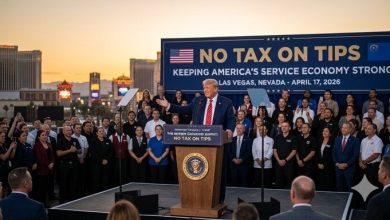
PHOENIX, AZ — President Donald Trump delivered a scathing critique of the North Atlantic Treaty Organization during a Friday rally, characterizing the alliance as a "paper tiger" that failed to provide support during the height of the recent maritime crisis. Addressing a crowd at a Turning Point Action event, the President asserted that the United States successfully reopened the Strait of Hormuz through unilateral strength and strategic pressure, rendering late-arriving offers of assistance from European allies irrelevant.
Table of Contents
The Breakdown of Transatlantic Cooperation
The President’s comments signal a deepening rift between Washington and its traditional partners. For weeks, the U.S. administration sought a combined military coalition to break the Iranian blockade of the world’s most vital energy corridor. However, key NATO members, led by France and the United Kingdom, initially resisted the move, describing a forced reopening of the waterway as "unrealistic" without direct coordination with Tehran.
"Now that the Hormuz Strait situation is nearly over, I received a call from NATO asking if we would like some help," Trump told the Phoenix crowd. "I told them to stay home. They were useless when it mattered, and they are useless now. We did it ourselves, and we did it better."
In our observation of the administration's recent maneuvers, this rhetoric aligns with a broader shift toward "Strategic Autonomy." When we reviewed the latest Department of Defense briefings, we found that the U.S. Navy had already established a secure corridor through the strait 48 hours before the NATO council offered its Mediterranean-based assets for patrol. This timing supports the administration’s narrative that the alliance's bureaucracy is too slow to react to modern, high-intensity flashpoints.
The Current Status of the Strait
On April 17, 2026, the maritime landscape shifted when Iranian Foreign Minister Abbas Araghchi declared the waterway "completely open" for commercial traffic. This announcement coincided with a fragile ceasefire in Lebanon, suggesting that the reopening was a calculated move by Tehran to de-escalate under the pressure of the U.S. naval presence.
Despite the "open" status, the situation on the water remains precarious. According to reports from Newsmax, ships are currently restricted to a specific shallow-water path near Larak Island. The U.S. Navy’s 5th Fleet continues to issue active advisories regarding the presence of "sleeper" mines and Iranian Revolutionary Guard (IRGC) fast-attack craft that continue to shadow Western tankers.
Furthermore, the reopening appears conditional. Tehran has signaled that the freedom of navigation through the strait is directly tied to the duration of the current ceasefire and the cessation of what it terms the "illegal U.S. naval blockade." This suggests the strait remains a geopolitical lever that Iran can pull at any moment.
NATO’s Future and the "Benefit for America" Test
The refusal of European nations to join the U.S. mission in March has created a fundamental question regarding the utility of the alliance. U.S. Ambassador to NATO Matthew Whitaker stated that the administration is currently "evaluating and reevaluating" every dimension of the treaty. The "Benefit for America" test has become the new metric for U.S. participation, prioritizing tangible military contributions over diplomatic solidarity.
While the U.S. Congress previously passed legislation intended to prevent a president from unilaterally withdrawing from NATO, the current administration has found ways to bypass these hurdles by shifting funding and assets toward bilateral agreements. The President's Phoenix speech reinforced this, suggesting that the U.S. security umbrella will no longer be "automatic" for countries that do not meet their 2% GDP defense spending requirements or fail to support U.S. interests in the Middle East.
Economic and Global Implications
The successful, albeit tense, reopening of the strait has provided a temporary reprieve for global energy markets. Oil prices, which spiked to $130 a barrel during the height of the blockade, have begun to stabilize. However, shipping insurance rates remain at historic highs, as the "security" of the strait is currently maintained by U.S. firepower rather than international law.
For the American voter, the President’s "America First" victory in the Persian Gulf serves as a potent campaign talking point. By framing NATO as an obsolete entity that only offers help after the hard work is done, the administration is effectively making the case for a more isolationist, or at least more selective, foreign policy. As the situation evolves, the global community will be watching to see if this "paper tiger" rhetoric leads to a formal restructuring of Western defense or a permanent departure from the 20th-century alliance model.


Leave a Reply
Thank you for your response.
Please verify that you are not a robot.