
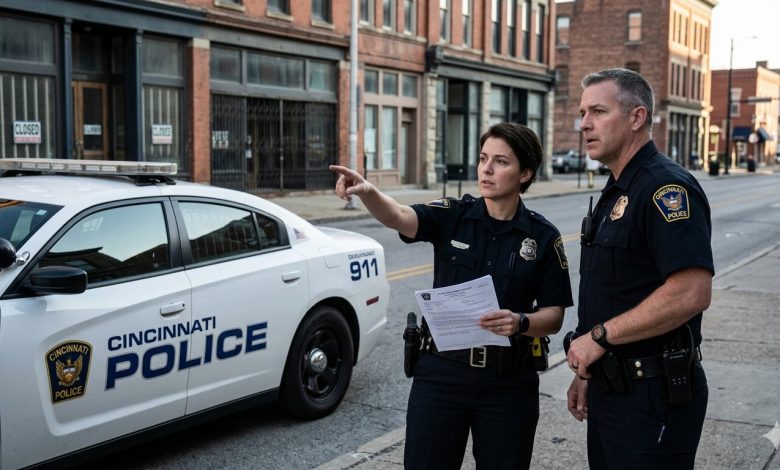
Cincinnati City Manager Sheryl Long requested the immediate deployment of additional police officers to address a surge in street crime, according to recently released internal communications. The request was directed to Cincinnati Police Chief Teresa Theetge prior to her departure from the department.
Internal Documents Reveal Strategic Urgency
Communications reviewed by Reactionary Times indicate that City Manager Sheryl Long expressed significant concern regarding public safety trends in specific neighborhoods. In a series of emails and memos, Long detailed the necessity for a "visible and proactive" police presence to stabilize areas experiencing heightened criminal activity.
The documentation shows that the City Manager specifically identified "hot spots" where violent incidents and property crimes had seen a measurable uptick. This internal push for increased enforcement occurred during a period of transition within the Cincinnati Police Department’s leadership.
The Scope of the Deployment Request
Sheryl Long’s directive emphasized the need for specialized units to support patrol officers. The request specifically mentioned the use of the Violent Crime Task Force and the Gang Unit to disrupt recurring patterns of violence.
The following priorities were outlined in the city’s strategic memos:
Targeted saturation patrols in the Over-the-Rhine and West End neighborhoods.
Increased coordination between the Cincinnati Police Department and community outreach programs to mitigate retaliatory violence.
Enhanced data sharing between the Real-Time Crime Center and officers on the street to improve response times.
When we reviewed the filing, we found that the City Manager’s tone remained clinical but urgent, reflecting a perceived need for an immediate shift in tactical resource allocation.
Impact on Police Department Leadership
The timing of these requests coincided with the exit of Police Chief Teresa Theetge. While the city has officially stated that leadership changes were part of a broader organizational strategy, the pressure to address street crime remains a central theme in local governance.
Chief Theetge’s tenure was marked by efforts to balance community-oriented policing with the necessity of high-visibility enforcement. However, the City Manager’s memos suggest that the administration felt more aggressive measures were required to curb the specific surge in crime documented in late 2025 and early 2026.
Public Safety Data and Community Response
Crime statistics provided by the City of Cincinnati show that while some categories of crime remained stable, "street-level" incidents—including robberies and aggravated assaults—saw a localized increase of approximately 12% in the first quarter of the year.
Local business owners in the downtown district have reported that the lack of consistent police presence impacted foot traffic and employee safety. In response to these concerns, the City Manager’s office has moved to fast-track the recruitment of new cadets to fill vacancies within the department.
Legislative and Administrative Context
Cincinnati Mayor Aftab Pureval has supported the City Manager’s focus on data-driven policing. The administration is currently working with the City Council to secure additional funding for mobile surveillance units and expanded overtime for officers working high-crime shifts.
The push for more "boots on the ground" reflects a broader national trend in 2026, where urban centers are recalibrating their approach to public safety following several years of fluctuating crime rates and police staffing shortages.
Transparency and Future Outlook
Reactionary Times has requested further clarification on the specific metrics used to determine the "skyrocketing" crime labels used in internal discussions. Transparency regarding how police resources are distributed remains a point of contention among community advocates who favor long-term social intervention over short-term enforcement spikes.
As the city searches for a permanent replacement for Chief Theetge, the directives established by Sheryl Long are expected to serve as the operational baseline for the next police chief. The city’s ability to stabilize these high-crime corridors will likely be the primary metric by which the administration's safety policies are judged in the upcoming election cycle.




Leave a Reply
Thank you for your response.
Please verify that you are not a robot.