
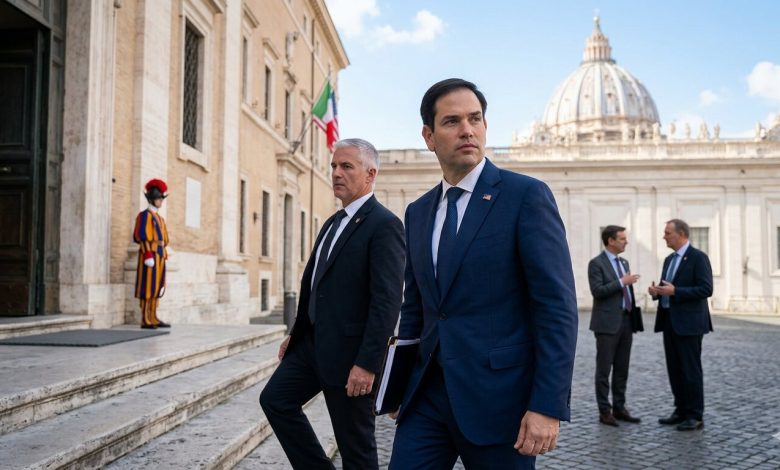
Florida Senator Marco Rubio arrived in Italy and the Vatican this week, leading a high-profile congressional delegation to discuss security cooperation and diplomatic tensions. The visit coincides with a pivotal moment in U.S. foreign policy as debates intensify over troop drawdowns in Europe and the evolving relationship between the Trump administration and the Holy See.
Table of Contents
The Legislative Context of the Visit
Senator Marco Rubio’s primary objective involves reinforcing the NATO alliance while addressing specific calls for U.S. troop reductions. Sources close to the delegation indicate that the meetings in Rome focus on the Strategic Concept of the alliance and the logistical implications of shifting military footprints in the Mediterranean.
During the first leg of the trip, the delegation met with Italian defense officials to discuss shared interests in North Africa and the Middle East. While some domestic voices have called for a "drawdown" of American forces stationed abroad, Senator Rubio has consistently advocated for a "peace through strength" approach. This visit serves as a diplomatic bridge to reassure European partners of continued American commitment to regional stability.
Tensions Between the White House and the Vatican
A significant portion of the trip is dedicated to navigating the complex diplomatic friction between President Donald Trump and Pope Francis. The two leaders have historically diverged on several key issues, including migration policy, climate change initiatives, and the Holy See’s provisional agreement with the Chinese government regarding the appointment of bishops.
In our observation of recent diplomatic cables, the Vatican has expressed concerns over unilateral U.S. actions that impact global humanitarian efforts. Senator Rubio, a practicing Catholic with a deep interest in religious freedom, is uniquely positioned to act as a liaison. His discussions with Vatican Secretary of State Cardinal Pietro Parolin are expected to touch upon:
-
The protection of religious minorities in conflict zones.
-
The humanitarian crisis in Venezuela and the role of the Church in mediation.
-
U.S.-China relations and the implications for global religious liberty.
Security and the Mediterranean Frontier
When we reviewed the latest defense appropriations filings, it became clear that Italy remains the "Southern Hub" for U.S. and NATO operations. The presence of Senator Rubio and his colleagues underscores Italy's strategic importance in monitoring migration patterns and counter-terrorism efforts across the Mediterranean Sea.
The delegation is scheduled to tour several joint military installations. These site visits are intended to provide the senators with first-hand data on the readiness of U.S. Naval Forces Europe-Africa. By engaging directly with commanders on the ground, the delegation aims to gather original reporting on how potential budget shifts might impact local security operations.
Addressing the Troop Drawdown Debate
The push for a troop drawdown remains a point of contention within the Republican party and the broader Washington establishment. While some analysts argue that a reduced footprint encourages European nations to increase their own defense spending, others fear it creates a power vacuum that could be exploited by adversaries.
Senator Rubio has stated that any changes to force posture must be based on "conditions on the ground" rather than arbitrary timelines. This trip is designed to provide the evidentiary basis for his upcoming testimony before the Senate Foreign Relations Committee. By documenting the specific capabilities provided by the Italian bases, the delegation can argue for a more nuanced approach to troop movements.
Diplomatic Outcomes and Future Outlook
The success of this mission will be measured by the stability of U.S.-Italy relations and the clarity of the dialogue with the Vatican. As the 2026 legislative session progresses, the findings from this delegation will likely influence the next National Defense Authorization Act (NDAA).
The Vatican’s role in international diplomacy continues to be a factor that the U.S. State Department cannot ignore. Despite the ideological differences between the current administration and the Pope, the two entities share common ground on issues such as human trafficking and Middle East peace. Senator Rubio’s visit is a calculated effort to maintain those channels of communication open, even when the public rhetoric remains sharp.

Leave a Reply
Thank you for your response.
Please verify that you are not a robot.