
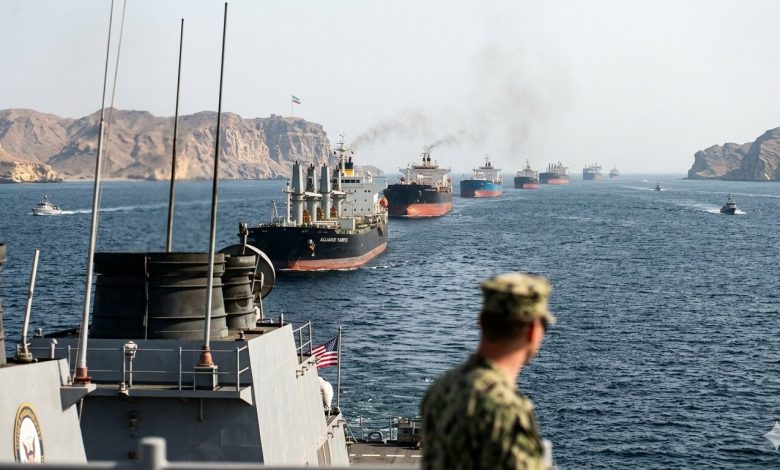
President Donald Trump initiated "Project Freedom" on Monday, a U.S. military operation designed to escort hundreds of stranded commercial vessels through the Strait of Hormuz. The move comes as Iran attempts to reassert its maritime blockade following the outbreak of hostilities in late February.
Table of Contents
U.S. Forces Engage Iranian Fast Boats
During the initial hours of the operation, U.S. Central Command (CENTCOM) confirmed that American forces engaged and sank at least six Iranian small boats. According to CENTCOM Commander Admiral Brad Cooper, the Iranian vessels attempted to interfere with the transit of protected merchant ships. In addition to the surface engagements, U.S. assets intercepted multiple Iranian cruise missiles and drones launched toward the convoy.
Despite the flare-up in violence, President Trump characterized the operation as a "humanitarian gesture" intended to assist neutral nations whose ships have been trapped in the Gulf for months. "Countries from all over the world have asked the United States if we could help free up their ships," Trump stated in a post on Truth Social. He warned that any further interference from Tehran would result in Iran being "blown off the face of the Earth."
Regional Tensions and Economic Impact
The Strait of Hormuz remains the world's most critical energy chokepoint, with approximately one-fifth of global oil and gas supplies passing through its narrow waters. The month-long blockade has already roiled global markets, pushing Brent crude prices above $120 per barrel. While the U.S. maintains that two American-flagged vessels—including the Alliance Fairfax—successfully exited the strait on Monday, the shipping industry remains wary.
Shipping experts have questioned the sustainability of "Project Freedom" without a formal diplomatic agreement. Industry representatives noted that insurance costs and crew safety concerns remain prohibitive for many of the 850 vessels currently anchored in the Gulf. "Without consent from Iran to let commercial ships transit safely, it is not clear whether the threat can be fully suppressed," said one industry analyst.
Iran Claims Ceasefire Violation
Tehran has reacted sharply to the U.S. naval presence. Ebrahim Azizi, head of Iran's National Security and Foreign Policy Commission, stated that any American interference in the "new maritime regime" of the strait constitutes a violation of the fragile ceasefire brokered in April. Iranian military officials have vowed to target any foreign forces entering the waterway without prior coordination with the Islamic Republic.
The escalation also complicates ongoing diplomatic efforts. Iran recently submitted a 14-point peace proposal via Pakistani mediators, but President Trump indicated over the weekend that he is likely to reject the terms, suggesting that Tehran "has not yet paid a big enough price."
International Response and Coordination
The international community remains divided on the unilateral U.S. move. While President Trump called on allies like South Korea to join the mission—citing an unexplained explosion on a South Korean cargo vessel on Monday—European leaders have expressed hesitation. French President Emmanuel Macron stated that the only viable solution is a "coordinated reopening" by both Washington and Tehran, adding that France would not participate in a military framework that remains "unclear."
As "Project Freedom" continues, the U.S. has deployed a significant force to the region, including guided-missile destroyers, over 100 aircraft, and 15,000 service members. The Pentagon maintains that these assets are strictly for defensive escort purposes, though the risk of a return to full-scale war remains high as both sides test each other's resolve in the narrow waterway.




Leave a Reply
Thank you for your response.
Please verify that you are not a robot.