
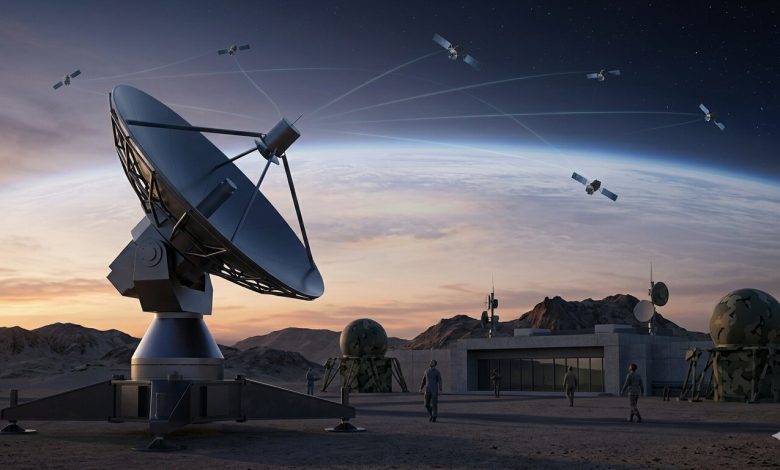
The Department of Defense has capitulated to a 500% price increase imposed by SpaceX for Starlink satellite connectivity powering American kamikaze drones in Iran.
In our observation of recent defense procurement updates, SpaceX officials leveraged their dominant orbital infrastructure to enforce a sharp markup on satellite terminal access. Within weeks of the United States launching its bombing campaign against Iran, senior executives from Elon Musk’s aerospace firm met with Pentagon officials.SpaceX argued that the U.S. military had been underpaying by utilizing standard service packages for high-stakes military infrastructure.
Table of Contents
The Battle Over Terminal Tariffs
The pricing dispute centers directly on the Commercial Satellite Communications Office and its deployment of LUCAS suicide drones. The LUCAS munition serves as a low-cost American analogue to Iran’s Shahed-136 loitering drone fleet, depending entirely on the low-Earth orbit constellation for mid-flight guidance updates and real-time post-strike visual confirmation.
When we reviewed the filing details and operational briefs, we found that the Pentagon originally paid approximately $5,000 per month for each active Starlink terminal. SpaceX countered that the extreme requirements of drone warfare—specifically low network latency, continuous signal redundancy, and massive bandwidth headroom—effectively pushed the military into an elite tier of service. Consequently, SpaceX demanded an upgrade to a $25,000 monthly rate per terminal, matching its premium aviation-grade tariff.
Pentagon negotiators initially pushed back against the fivefold markup. Department of Defense officials argued that aviation tariffs are fundamentally structured for manned aircraft with long operational lifespans, rather than single-use, one-way munitions that detonate upon impact after a few hours of flight. However, mid-campaign and lacking a viable secondary provider capable of matching SpaceX's network of over 10,200 active satellites, the Pentagon yielded to the terms.
Exploiting Monopolistic Leverage
This commercial showdown underscores the Pentagon's critical single-vendor vulnerability. The immediate financial fallout directly alters the economics of the current conflict.
-
Surging Unit Costs: The price of operating a single LUCAS suicide drone escalated from an initial $30,000 baseline to nearly $60,000, with satellite data connectivity now accounting for the majority of the weapon's total lifetime cost.
-
Expanding Starshield Subscriptions: Despite official frustrations, defense documents show the Pentagon is actively preparing a new order of 3,500 military-grade Starshield subscriptions, including 100 specialized aviation-tier terminals.
-
Alternative Supplier Vacuum: While the military continues funding efforts to cultivate satellite communication rivals, no private contractor currently possesses the infrastructure scale to challenge SpaceX’s 60% share of all operational spacecraft.
Timing the Initial Public Offering
The aggressive pricing shift aligns precisely with SpaceX's broader corporate timeline. The company generated $11.4 billion in Starlink revenue throughout 2025, with federal government contracts accounting for roughly 20% of its total intake.
This dramatic revenue surge lands just ahead of the highly anticipated SpaceX Initial Public Offering (IPO) scheduled for June 2026. Financial analysts project the public listing will target an unprecedented $1.75 trillion market capitalization, with the formal investment roadshow slated to begin on June 8. By embedding higher-yielding government contracts into its current balance sheet, SpaceX significantly improves its financial metrics prior to issuing public stock.
Tensions also remain high regarding secondary system negotiations. Defense officials confirmed that SpaceX proposed a $500 million upfront fee alongside a $100 million ongoing monthly charge to deploy a direct-to-cell capability over Iran. This experimental service would allow ordinary mobile devices on the ground to bypass state-sponsored internet blackouts without requiring physical satellite dishes. Pentagon representatives reportedly greeted the steep price tag with visible alarm, leaving those specific negotiations paused as the broader air campaign continues.





Leave a Reply
Thank you for your response.
Please verify that you are not a robot.