
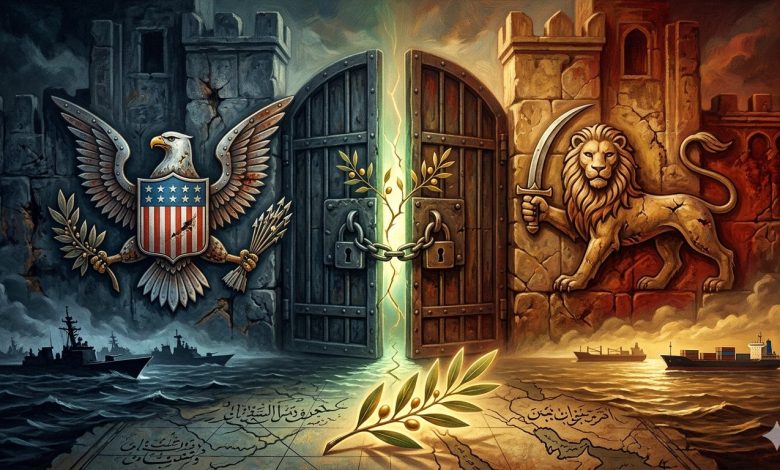
The United States and Iran have initiated a preliminary diplomatic draft to conclude their three-month military conflict, signaling an opening of the blockaded Strait of Hormuz despite immense friction over unresolved nuclear terms.
In our observation of the text, the preliminary memorandum of understanding functions more as a pathway to extended diplomacy than a definitive peace treaty. While President Donald Trump declared the agreement "largely negotiated" with an official announcement expected shortly, Iranian officials are heavily spinning the framework inside domestic state media as a sovereign victory over Western pressure.
Table of Contents
The Logistics of the Interim Accord
The 14-clause document emerged following intensive backdoor mediation by Pakistani and Qatari negotiators shuttling between Tehran and U.S. Envoy Steve Witkoff. The draft prioritizes immediate economic stabilization over long-term security guarantees, laying out two crucial timelines:
-
A 30-day window designated to lift the U.S. naval blockade and restore global commercial shipping traffic within the Strait of Hormuz to prewar baseline levels.
-
A 60-day window dedicated to secondary negotiations over Iran's highly enriched uranium stockpiles, alongside an initial release of select frozen Iranian financial assets.
When we reviewed the context of the conflict, which erupted on February 28, 2026, with joint U.S.-Israeli strikes and the elimination of Supreme Leader Ali Khamenei, the parameters reveal major compromises. The White House has seemingly backed away from its original demand for an "unconditional surrender," likely motivated by domestic economic pressures, as spiked U.S. inflation has eroded political support for a prolonged campaign.
The Strait of Hormuz and Security Jurisdiction
Geopolitical control over shipping lanes remains a highly contested point of friction within the diplomatic channels. Iranian Foreign Ministry Spokesman Esmail Baghaei stated that any permanent security operational framework for the Strait of Hormuz must be resolved strictly among regional littoral states.
The regional powers involved in these specific transit discussions include Iran and Oman. Baghaei publicly stressed that the United States "has nothing to do" with the waterway, an assertion meant to push back against permanent American maritime oversight in a corridor that channels 25 percent of global seaborne oil.
Unresolved Nuclear Concessions and Disputed Claims
The nuclear file remains the most volatile threat to the endurance of the ceasefire. Conflicting statements from both governments reveal deep fractures regarding what has actually been settled on paper:
-
United States officials claim that Tehran has agreed in principle to entirely surrender its current stockpile of near-weapons-grade enriched uranium.
-
Iranian state media and senior diplomatic sources completely reject this narrative, asserting that the nuclear file is explicitly excluded from the active text.
Beyond the nuclear dispute, the clerical administration in Tehran enters follow-on talks with its core assets untouched. The current framework leaves Iran's extensive ballistic missile programs and regional proxy militia networks entirely unaddressed, allowing the government to survive structural decapitation.
Assessing the Longevity of the Peace Draft
The core vulnerabilities of the draft lie in this massive gap between American expectations of disarmament and Iranian resistance. While the April 8 ceasefire continues to hold despite intermittent skirmishes, the next 60 days of technical meetings will determine if this framework yields permanent stability or a return to active combat.




Leave a Reply
Thank you for your response.
Please verify that you are not a robot.