
Apple Inc. must aggressively overhaul its Apple Watch and digital health ecosystem to survive a critical market pivot. As consumer preferences shift away from complex, screen-heavy devices toward specialized health trackers, Apple's hardware dominance faces unprecedented challenges.
According to data compiled in the latest Bloomberg Power On newsletter, rival companies are successfully capturing market share by targeting screen-free minimalism and advanced AI coaching. Competitors like Whoop and Oura have demonstrated that users increasingly favor long battery life and ambient metrics over a secondary smartphone display on their wrists. Meanwhile, Google's integrated Fitbit ecosystem continues to narrow the analytical gap, forcing Apple to reconsider its slow-moving watchOS feature rollout.
Table of Contents
The Screen-Free Defection
In our observation of recent consumer tech trends, the classic smartwatch form factor is experiencing significant fatigue. Users frequently report notification exhaustion, prompting a shift toward passive, health-first alternatives like smart rings and fabric bands.
Apple’s reliance on the standard Apple Watch form factor limits its ability to capture this evolving segment. While the Ultra series captured the endurance market, mainstream buyers are actively looking for devices that do not demand daily charging or continuous visual attention. To maintain its market lead, Apple must diversify its wearable lineup beyond the wrist, potentially accelerating its rumored smart ring initiatives and expanding health intelligence within AirPods.
Emerging Security Risks on the Wrist
Beyond form-factor fatigue, the technical architecture of traditional smartwatches presents growing external vulnerabilities that nimble competitors might avoid. Researchers have increasingly highlighted the security liabilities inherent in complex wrist-worn accelerometers.
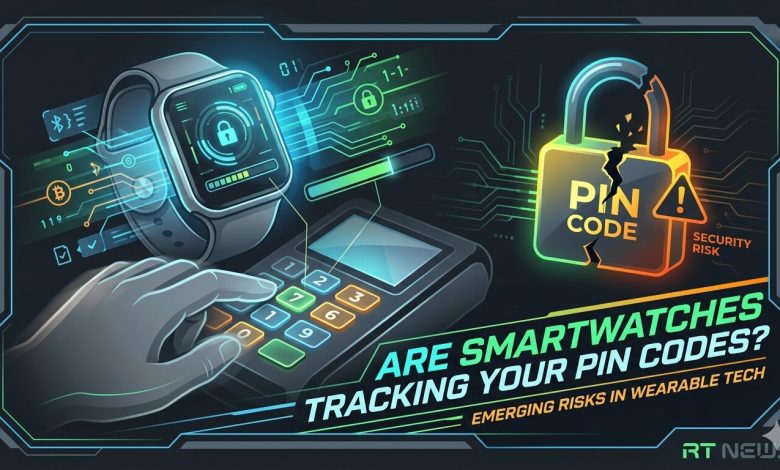
As documented by cybersecurity analysts, modern smartwatches can be used to record credit card and ATM PIN codesby tracking the precise micro-movements of a user's hand while typing at a terminal. This emerging threat matrix adds unexpected pressure on Apple's engineering teams, who must now balance sophisticated health-tracking sensitivity with robust user data protection. Screen-less trackers or finger-based rings present entirely different physical movement profiles, potentially altering the landscape of wearable telemetry theft.
AI Coaching and Regulatory Roadblocks
The second front of the wearable war centers on software intelligence rather than physical hardware. Competitors are rapidly deploying deep generative AI coaches that interpret sleep and recovery data into actionable, personalized daily advice.
Apple’s traditional stance on health data privacy has historically slowed its deployment of cloud-assisted AI recommendations. While the upcoming iOS 27 ecosystem plans to introduce upgraded visual AI models and localized machine learning, its health-specific coaching still lacks the predictive flexibility found in competing platforms. Furthermore, strict regulatory scrutiny worldwide continues to delay advanced clinical sensor approvals, leaving Apple stuck in a hardware holding pattern while agile software competitors iterate weekly.





Leave a Reply
Thank you for your response.
Please verify that you are not a robot.