
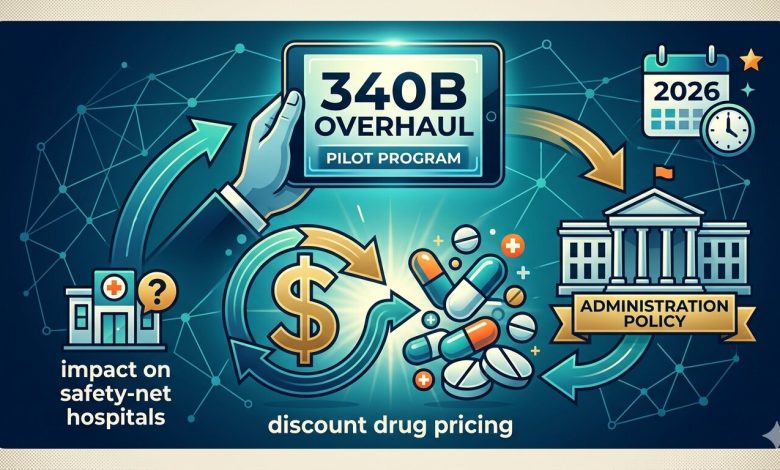
WASHINGTON — President Donald J. Trump and the Health Resources and Services Administration (HRSA) announced a pivotal expansion of the 340B Drug Pricing Program, initiating a voluntary pilot program that transitions the decades-old discount model into a manufacturer-led rebate system.
The move signals a significant departure from the traditional 340B framework. Since its inception in 1992, the program has required pharmaceutical companies to provide upfront discounts of 20% to 50% on outpatient drugs to safety-net hospitals and clinics. Under the new pilot, participating manufacturers will instead collect full price at the point of sale and issue rebates to providers after the fact.
Table of Contents
A New Operational Framework for 340B
In our review of the HRSA implementation guidelines, the administration is focusing the pilot initially on 10 high-cost drugs currently included on the Medicare drug price negotiation list. To receive reimbursements under this new model, healthcare providers must submit dispensing data to manufacturers within 45 days.
According to HRSA Administrator Tom Engels, the rebate model is designed to address longstanding industry concerns regarding "duplicate discounts," where drugmakers inadvertently pay both a 340B discount and a Medicaid rebate on the same unit of medicine. The administration stated that the program aims to increase transparency and oversight by leveraging the Centers for Medicare and Medicaid Services (CMS) to monitor the flow of funds.
Industry Pushback and Financial Concerns
The shift has sparked immediate criticism from hospital advocacy groups who argue the change threatens the financial stability of rural and low-income clinics. 340B Health, an association representing over 1,600 hospitals, stated that a "post-purchase" model forces facilities to carry the cost of expensive medications upfront.
"When we analyzed the potential impact on our member hospitals, the data suggested that some facilities would be forced to pay an average of $72 million more in upfront costs annually," the organization noted in a statement. The American Hospital Association (AHA) also cautioned that the pilot sets a "dangerous precedent" by moving away from the statutory intent of providing immediate relief to providers serving underserved populations.
The Regulatory Landscape
This pilot program is part of a broader Trump administration effort to redesign pharmaceutical pricing. It coincides with the expansion of TrumpRx.gov, a platform intended to integrate cash-price transparency for generic medications from providers like Amazon Pharmacy and Cost Plus Drugs.
The administration has also instructed the Department of Health and Human Services (HHS) to conduct a comprehensive 340B cost survey within the next 180 days. This survey will propose adjustments to align Medicare payments more closely with the actual acquisition costs of drugs at the hospital level.
How the New Model Works
For healthcare administrators and providers attempting to navigate the changes, the pilot functions through a specific four-step cycle:
-
Manufacturer Application: Drugmakers have until September 15 to apply for the pilot.
-
Point of Sale: Hospitals pay the established market price for the covered drugs.
-
Data Submission: Providers must submit claims data to the manufacturer within 45 days of dispensing the medication.
-
Rebate Issuance: Once the data is verified, manufacturers are required to issue the rebate within 10 days.
The administration maintains that this "measured approach" will reduce administrative friction between drugmakers and safety-net providers. However, critics in the Illinois General Assembly and other state bodies have warned that these changes could inadvertently increase costs for state-funded insurance plans if 340B savings are delayed or diminished.
As the January 1 start date approaches, the legal and operational viability of this rebate model remains a central focus for the pharmaceutical and healthcare sectors.




Leave a Reply
Thank you for your response.
Please verify that you are not a robot.