
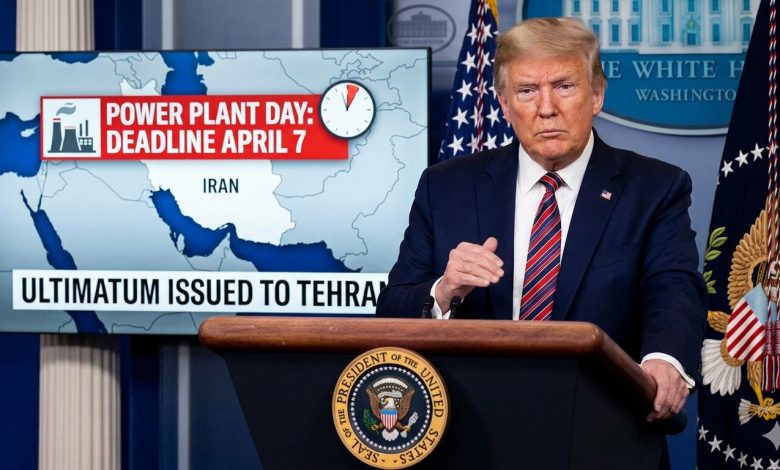
WASHINGTON, D.C. — President Donald Trump has declared Tuesday, April 7, as "Power Plant Day," marking a definitive and potentially catastrophic deadline for the Iranian regime. In a high-stakes briefing from the White House, the President warned that the United States is prepared to dismantle Iran’s civilian energy grid and transportation infrastructure if the Strait of Hormuz is not immediately reopened to global oil traffic.
The ultimatum, which expires at 8:00 P.M. ET Tuesday, signals a shift in "Operation Epic Fury" from strictly military and leadership targets to the nation's core industrial capabilities.
Table of Contents
The Strategic Shift to Infrastructure
Since the commencement of joint U.S.-Israeli operations on February 28, 2026, the coalition has focused on "decapitation" strikes, which successfully eliminated former Supreme Leader Ali Khamenei and neutralized much of Iran’s conventional navy and air force. However, despite these losses, Tehran continues to maintain a blockade on the Strait of Hormuz, through which 20% of the world’s oil flows.
"Tuesday will be Power Plant Day and Bridge Day, all wrapped up in one," President Trump stated via Truth Social and later confirmed during a 90-minute press conference. "There will be nothing like it. They have the chance to join a new path, or they will be living in hell—just watch."
Civilian Impact and “Stone Age” Rhetoric
The administration’s "Answer-First" approach to this phase of the conflict is clear: the objective is the total economic and industrial paralysis of Iran until the blockade is lifted. Secretary of Defense Pete Hegseth echoed this sentiment, noting that the military is prepared for the "largest volume of strikes" since the war began.
When questioned by reporters regarding the potential for a humanitarian crisis or violations of international law, the President remained firm. "I’m not concerned at all," Trump remarked, suggesting that the goal of preventing a nuclear-armed Iran justifies the "Stone Age" rhetoric often used by his cabinet.
Domestic Pressure: The $4.00 Gallon
The urgency of the April 7 deadline is underscored by mounting economic pressure at home. U.S. gas prices have surged to an average of $4.00 per gallon, a "short-term" pain that the President argues is necessary to secure long-term energy independence.
"To those countries that can't get fuel—many of which refused to get involved—I have a suggestion," Trump said during an Easter event on the White House lawn. "Buy oil from the United States; we have plenty. And build up some delayed courage to go to the Strait and take it back."
Military Success: F-15E Crew Rescue
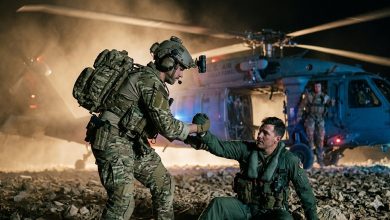
Amid the escalating threats, the Pentagon provided a morale-boosting update regarding the rescue of two F-15E Strike Eagle airmen. The crew was downed over Iranian territory during the Easter weekend.
-
Rescue Execution: U.S. Special Operations successfully extracted both aviators within 48 hours of their aircraft being shot down.
-
Casualty Report: To date, 13 Americans have been killed in the conflict, with 373 service members injured, though 330 have already returned to duty.
The Diplomatic Last Stand
While the military prepares for "Power Plant Day," a thin thread of diplomacy remains. Pakistan, acting as a key mediator, has floated a 45-day ceasefire proposal. However, Iran’s state-run IRNA news agency reported Monday that Tehran has rejected the proposal, demanding a permanent end to hostilities and the lifting of all sanctions before reopening the Strait.
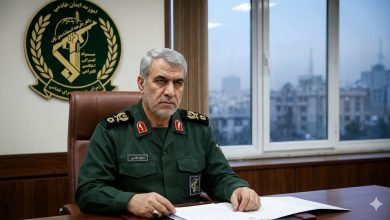
With the clock ticking toward Tuesday night, the international community remains on edge. If the deadline passes without a concession from the interim Iranian leadership, "Operation Epic Fury" will move into its most destructive phase yet, targeting the very utilities that sustain the lives of 93 million people.



Leave a Reply
Thank you for your response.
Please verify that you are not a robot.