
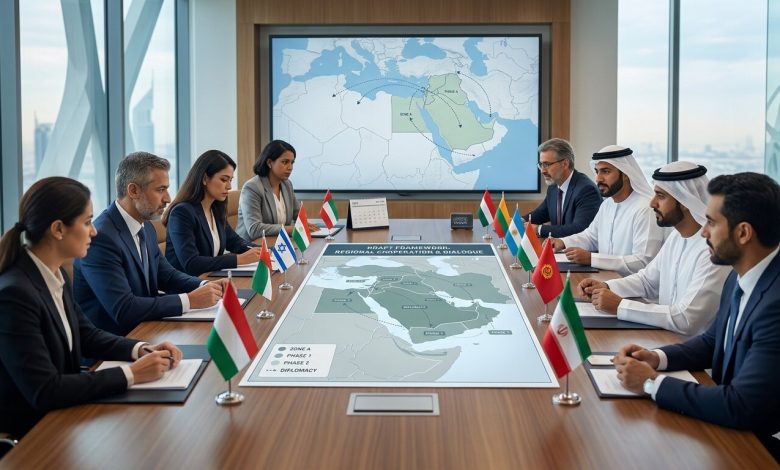
President Donald Trump has circulated a draft peace agreement regarding Iran to Israel and key international allies, signaling an active diplomatic effort to de-escalate Middle East conflicts. The framework, initially detailed in a report by The Guardian, operates as a consultative roadmap rather than a final binding accord. It marks an ambitious attempt by the administration to shift regional dynamics through structured, phased negotiations.
Table of Contents
The Diplomatic Strategy Behind the Draft
Circulating initial drafts allows Washington to gauge ally support and identify core diplomatic friction points early. According to administration sources familiar with the strategy, this methodology ensures that crucial regional partners like Israel can input security requirements before formal text reaches Tehran.
Vice President JD Vance indicated that while a final deal is not yet finalized, negotiations are moving closer to a breakthrough. In a recent public briefing, Vice President Vance stated that while the parties "are not there yet," diplomatic teams are actively working through remaining differences.
Key Provisions of the Phased Framework
The draft framework relies on a multi-stage de-escalation process designed to stabilize the region. The primary phases focus on immediate operational security risks before moving toward long-term systemic agreements.
Initial Operational Stability
The immediate phase calls for mutual reductions in military activity alongside an expansion of direct diplomatic communication channels. In our assessment of the framework's sequencing, this serves to lower the immediate threat of kinetic conflict. Concurrently, the draft outlines targeted maritime security provisions to fully restore commercial shipping routes through critical regional waterways.
Sanctions Relief and Verification
Financial incentives within the text remain strictly tied to verified Iranian compliance with security metrics. The proposal outlines potential, phased sanctions relief that would activate only after independent international monitors verify Iranian adherence to specified operational drawdowns. Subsequent phases aim to bring Iran’s nuclear program under strict international monitoring protocols, though specific timeline sequencing remains under debate.
Strategic Frictions and Next Steps
Israeli and regional defense officials have raised immediate concerns regarding the timing of specific concessions. In reports analyzing regional responses, intelligence sources emphasized that the primary point of contention centers on the sequencing of sanctions relief versus verifiable nuclear rollbacks.
Neither Washington nor Tehran has formally approved the text, leaving the document as an active negotiation framework. The administration continues to review allied feedback to adjust the scope of security commitments before pursuing next diplomatic stages.





Leave a Reply
Thank you for your response.
Please verify that you are not a robot.