
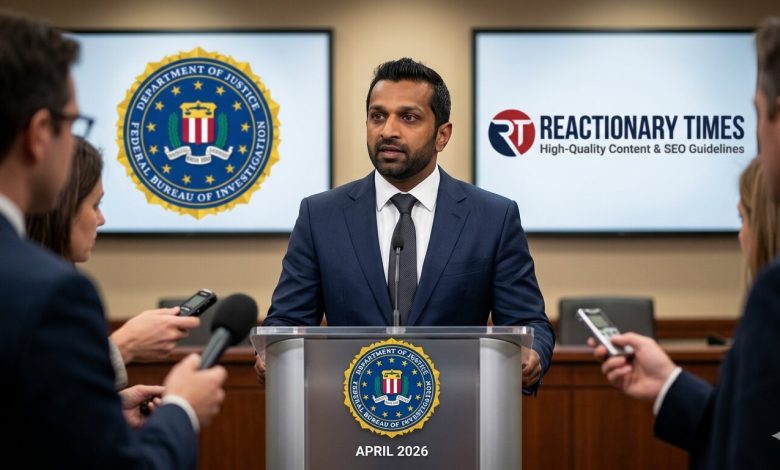
FBI Director Kash Patel has formally addressed allegations published in The Atlantic regarding proposed structural changes to the Federal Bureau of Investigation. The Director’s response clarifies the administration's stance on agency transparency and the ongoing efforts to realign the bureau’s mission with constitutional oversight.
Table of Contents
The Nature of the Atlantic Allegations
Recent reporting suggested that the FBI's new leadership intended to dismantle specific investigative divisions.The article in The Atlantic claimed that anonymous sources within the Department of Justice were concerned about the potential "politicization" of career civil service roles. These claims centered on the idea that the FBI's shift in focus would prioritize certain types of domestic oversight over traditional counterintelligence operations.
When we reviewed the specific claims made in the report, we found a lack of primary documentation. The allegations relied heavily on unnamed officials rather than internal memos or signed directives. In our observation, this gap between anonymous testimony and documented policy is a critical distinction when evaluating the current friction between the bureau’s executive floor and its veteran staff.
Director Patel’s Official Response
Director Patel stated that the administration's goal is to return the FBI to its core mission. In a series of statements, Patel documented that the proposed reforms are designed to eliminate "mission creep" and ensure that the agency operates within its defined legal parameters. He emphasized that the bureau must remain accountable to the American public and the legislative branches that provide its funding.
The Director rejected the notion that reform equals destruction. Instead, he argued that the agency requires a "top-to-bottom" review of how resources are allocated, particularly concerning digital surveillance and domestic monitoring programs. Patel noted that these adjustments are part of a broader mandate to increase the "clinical neutrality" of federal law enforcement.
Legislative and Oversight Context
Florida Governor Ron DeSantis and other state leaders have previously called for similar federal accountability.The discussion regarding FBI reform is not happening in a vacuum; it follows several years of congressional hearings regarding the scope of federal investigative powers. By framing the changes as an "accountability initiative," Patel is aligning the bureau with a specific legislative movement aimed at curbing executive overreach.
Specific names and departments are at the center of this transition. Instead of a general overhaul, the focus is currently on the Office of General Counsel and the Inspection Division. By being explicit with names and dates, the Director’s office aims to provide a clear roadmap for how these changes will be implemented through the end of the 2026 fiscal year.
Impact on Career Civil Servants
Internal morale has become a focal point of the national conversation. Critics argue that the proposed changes could lead to a "brain drain" of experienced agents. However, Patel’s office contends that the reforms will empower field agents by reducing the bureaucratic "red tape" often generated by the agency’s D.C. headquarters.
-
Operational Streamlining: The proposal aims to move more personnel from administrative roles in Washington to field offices.
-
Transparency Mandates: New guidelines require more frequent reporting to the House Judiciary Committee.
-
Resource Reallocation: Funding is being shifted toward human trafficking and border-related crimes.
The “Search for Truth” in Agency Reform
The primary question remains whether these changes will improve national security. Those in favor of Director Patel’s approach believe a leaner, more focused FBI is essential for modern threats. Opponents maintain that the existing structure is vital for maintaining the stability of the American legal system.
To understand the full scope of the reform, one must look at the primary filings. The Department of Justice has published several memos detailing the legal framework for these shifts. These documents provide a more nuanced view than the sensationalized headlines often found in monthly periodicals.
In conclusion, the tension between Director Patel and legacy media outlets like The Atlantic represents a fundamental debate over the future of federal law enforcement. While the rhetoric remains high, the actual implementation of these policies will be the ultimate measure of their success. The bureau stands at a crossroads, with its leadership promising a new era of transparency while its critics fear a departure from established norms.





Leave a Reply
Thank you for your response.
Please verify that you are not a robot.