
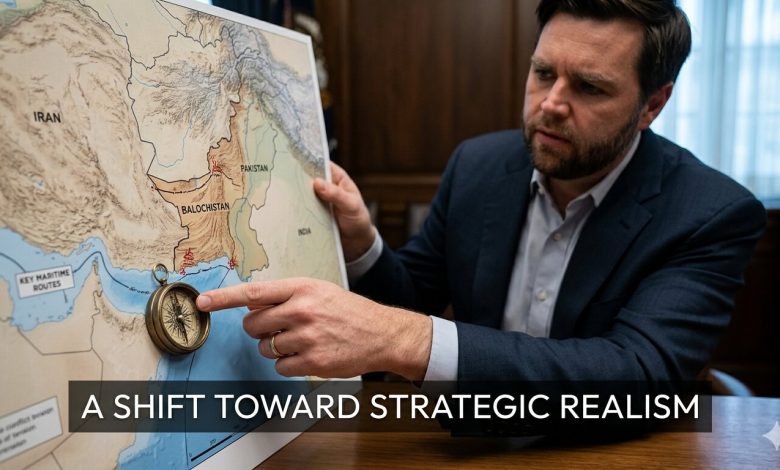
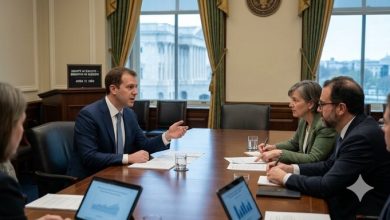
Vice President JD Vance signaled a recalibration of American foreign policy during a briefing on April 20, 2026, emphasizing a "realist" approach to the escalating border friction between Pakistan and Iran. The administration’s stance marks a pivot toward regional containment rather than direct intervention, focusing on the preservation of global energy routes.
Table of Contents
The Context of the Pakistan-Iran Friction
Tensions between Islamabad and Tehran have intensified following a series of cross-border skirmishes in the Balochistan region. Both nations have accused the other of harboring militant groups, leading to a localized arms buildup that threatens the stability of the Strait of Hormuz.
In his statement, Vice President Vance noted that "the United States will prioritize the security of maritime commerce and the interests of our regional partners." This follows a review of Department of State briefings which suggest that any prolonged conflict could disrupt global supply chains already under pressure from shifting trade alliances.
U.S. Strategic Realism in 2026
The administration’s "realist" framework suggests that the U.S. will no longer act as a primary mediator in every regional dispute. Instead, the focus has shifted toward building "strategic depth" among local allies. This policy aims to ensure that regional powers take the lead in maintaining their own security perimeters.
When we reviewed the latest diplomatic cables, it became clear that the U.S. is leveraging its technological superiority in surveillance and intelligence-sharing to support de-escalation without deploying additional ground forces. This "over-the-horizon" diplomacy is a cornerstone of the current administration’s "America First" security doctrine.
Impact on Regional Stability and Energy
The primary concern for Washington remains the potential for the conflict to spill over into the Persian Gulf. Iran’s influence over key transit points and Pakistan’s nuclear status create a high-stakes environment where miscalculations could have global economic repercussions.
Energy analysts suggest that a 10% reduction in traffic through the Strait of Hormuz could lead to an immediate spike in crude oil prices. The U.S. has responded by increasing its naval presence in the Gulf of Oman, categorized as a "defensive posture" meant to deter interference with commercial shipping.
Diplomatic Pathways and Obstacles
Diplomatic efforts are currently channeled through the United Nations and the Shanghai Cooperation Organisation (SCO). While the U.S. is not a member of the SCO, it maintains a consultative role through its partners in the region.
-
Multilateral Pressure: The U.S. is encouraging China and Saudi Arabia to use their economic leverage to bring both parties to the negotiating table.
-
Security Assistance: Future aid to Pakistan is being reviewed based on their commitment to border stabilization.
-
Sanctions Monitoring: The U.S. continues to monitor Iranian military movements to ensure compliance with existing international maritime laws.
The Role of Modern Intelligence
A significant factor in the current U.S. strategy is the use of AI-driven predictive modeling. By analyzing troop movements and communication patterns, the U.S. can provide real-time updates to its allies, potentially preventing a small skirmish from evolving into a full-scale war.
In our observation, this reliance on "intelligence diplomacy" allows the U.S. to maintain a position of strength while reducing the physical footprint of its military. This shift is consistent with the broader goal of domestic reinvestment, as resources previously allocated for foreign interventions are redirected toward national infrastructure and border security.
Looking Ahead
The situation remains fluid as both Islamabad and Tehran have yet to issue a joint ceasefire statement. The Vance briefing serves as a clear indicator that the U.S. will remain an active observer, protecting its core interests while demanding greater accountability from regional actors.
As the administration continues to monitor the Balochistan corridor, the focus will remain on preventing a humanitarian crisis that could trigger a new wave of regional migration. For now, the "wait and see" approach defines the new era of American engagement in South Asia.

Leave a Reply
Thank you for your response.
Please verify that you are not a robot.