
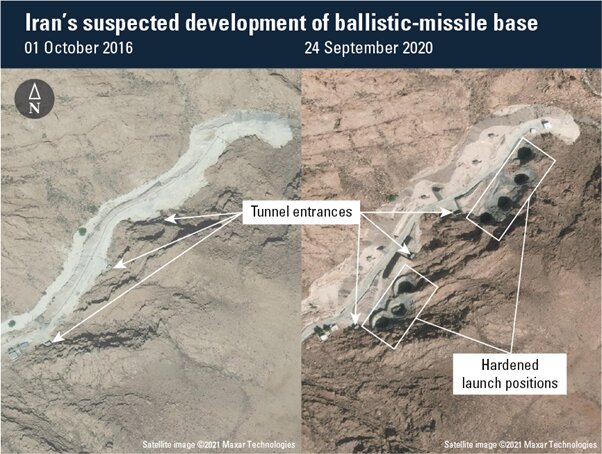
A classified U.S. intelligence assessment contradicts recent claims of total victory over Tehran’s military infrastructure. Despite months of precision airstrikes by the United States and Israel, the Islamic Republic has successfully restored operational access to the vast majority of its underground missile facilities.
Table of Contents
The Resilience of Iran’s Missile Network
Intelligence reports indicate that Iran has regained access to 30 of its 33 primary missile sites. These facilities, primarily located along the strategic Strait of Hormuz, were thought to be disabled following a series of heavy bombardments in early 2026. However, satellite imagery and internal surveillance data reviewed by U.S. policymakers earlier this month suggest that roughly 90% of these underground storage and launch sites are now "partially or fully operational."
Tehran’s mobile launcher inventory remains significantly intact. While the Trump administration previously suggested that Iran’s firepower was decimated, the new assessment shows the regime still possesses nearly 70% of its pre-war missile stockpile. This includes both long-range ballistic missiles and a smaller, more tactical supply of cruise missiles designed for maritime strikes.
Depletion of Advanced U.S. Munitions
The prolonged conflict is placing a mounting strain on the United States' own sophisticated weaponry. According to an assessment from the Center for Strategic and International Studies (CSIS), intense combat operations have exhausted a staggering proportion of the Pentagon's most advanced interceptors.
-
Precision Strike Missiles (PrSM): The U.S. used these for the first time in combat against Iranian targets, but stockpiles are dropping faster than production.
-
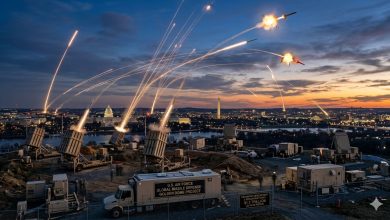
Air Defense Interceptors: Heavy use of Patriot, THAAD, SM-3, and SM-6 systems to counter Iranian waves has depleted reserves.
-
Tomahawk Cruise Missiles: The U.S. has launched over 1,000 Tomahawks—roughly ten times the annual procurement rate.
Strategic Deadlock in the Strait of Hormuz
The Iranian regime is leveraging its restored capabilities to assert sovereignty over global shipping lanes. In our observation of recent Iranian internal dynamics, officials like Mohammad Mokhber have equated control of the Strait of Hormuz to the strategic value of a nuclear weapon. By demonstrating the ability to launch missiles directly from reactivated facilities, Tehran aims to maintain high global oil prices and pressure Washington into diplomatic concessions.
Russia has reportedly stepped in to bolster Iranian defenses. Confidential documents revealed a Russian proposal to supply Iran with 5,000 short-range drones and specialized training. This partnership suggests a shifting landscape where fiber-optic drone technology could be used to defend Iranian territory against potential ground operations or further naval blockades.




Leave a Reply
Thank you for your response.
Please verify that you are not a robot.