
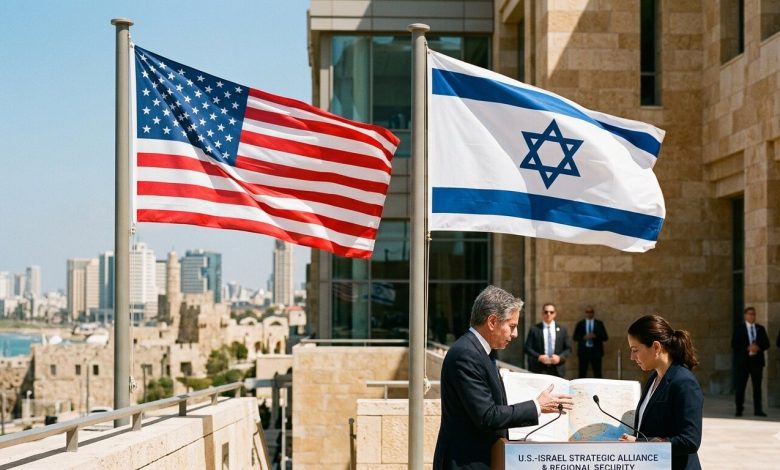
Israeli Prime Minister Benjamin Netanyahu and U.S. President Donald Trump have publicly dismissed reports of a growing fracture in their relationship, labeling recent frictions as routine tactical disagreements. In a series of statements released on June 3, 2026, both leaders emphasized that their broader strategic alignment—particularly regarding regional threats like Iran and Hezbollah—remains entirely intact.
Table of Contents
The Friction Over Regional Strategy
Recent diplomatic discussions between Washington and Jerusalem have experienced visible friction, primarily driven by differing views on the management of ongoing conflicts. When our newsroom reviewed the transcript of Prime Minister Netanyahu’s interview with CNBC, the leader acknowledged that operational variations do occur between the two allies.
The core disagreement centers on the scale of Israeli military actions against Hezbollah in Lebanon. President Trump confirmed during an interview that he expressed frustration to Prime Minister Netanyahu during a phone conversation, stating he was "a little bit perturbed" that the intensity of the northern front operations was complicating broader diplomatic tracks.
Negotiations with Iran represent the primary strategic friction point, as Washington seeks to advance a comprehensive framework to prevent Tehran from acquiring nuclear capabilities, while Jerusalem maintains a highly kinetic defensive posture on its borders.
Maintaining the Alliance
Strategic alignment remains the official baseline for both administrations despite the public admission of operational friction. Prime Minister Netanyahu explicitly rejected suggestions of a deep or permanent split, describing the recent back-and-forth as natural policy variations.
Frequent communication continues between the two leaders to coordinate security efforts across the Middle East. Prime Minister Netanyahu stated that he speaks with the U.S. President approximately once every two days to ensure tactical adjustments do not undermine their shared long-term objectives.
The ongoing war still lacks a finalized exit strategy, a point that Prime Minister Netanyahu openly acknowledged when questioned about the parameters of a potential ceasefire framework. The Israeli leader noted that the exact conditions for concluding the current military campaign remain an open question.
Strategic Objectives and Next Steps
Preventing a nuclear Iran stays at the absolute top of the bilateral agenda for both governments. While the timeline and specific diplomatic maneuvers remain fluid, both administrations continue to emphasize that their foundational security agreements are not compromised by temporary friction.
-
Frequent Bilateral Contact: Daily to bi-daily phone calls between the executive offices are maintained to manage the fluid situation in Lebanon and Gaza.
-
Shared Intelligence Frameworks: Joint operations and strategic planning sessions regarding Iranian proxies continue without interruption.
-
Open End-Game Parameters: Diplomatic teams are actively working to define the exact benchmarks required for a stable regional ceasefire.





Leave a Reply
Thank you for your response.
Please verify that you are not a robot.