
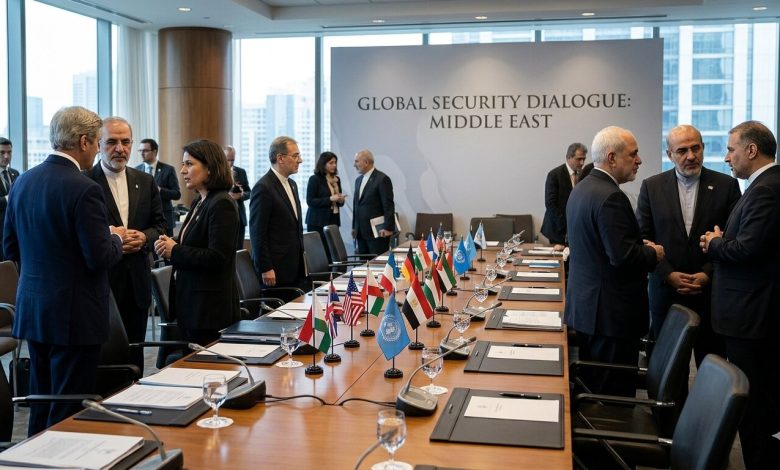
Secretary of State Marco Rubio stated Tuesday that Iran has agreed to negotiate aspects of its nuclear program that it previously refused to address, offering a sliver of diplomatic optimism despite an increasingly fragile wartime ceasefire.
Testifying publicly before Congress for the first time since the outbreak of the U.S.–Iran conflict on February 28, America's top diplomat maintained a clinical demeanor while facing a barrage of questions regarding the Trump administration’s foreign policy and defense expenditures. Rubio spoke directly to the Senate Foreign Relations Committee as part of the State Department’s annual budget request, though legislative focus quickly pivoted to the theater of war.
Table of Contents
New Diplomatic Openings and Ground Realities
In our observation of the dynamic situation in the Middle East, the administration is navigating a deeply volatile geopolitical landscape. Rubio informed lawmakers that Tehran has shown a sudden willingness to discuss previously taboo nuclear concessions, though he stopped short of projecting the ultimate success of these talks.
"They have agreed to negotiate aspects of their nuclear program that just a month ago, just a year ago, they were refusing to even mention," Rubio testified, keeping details regarding the specific concessions confidential.
However, this diplomatic optimism faces immediate headwind from reporting by semiofficial Iranian news agencies, which documented that Tehran has suspended communication with regional mediators. This freeze followed recent cross-border tensions, including Israeli defense warnings targeting Beirut as operations continue against the Iranian-backed group Hezbollah.
Rising Bipartisan Scrutiny Over War Costs
When we reviewed the legislative fallout from the conflict, we found a distinct shift in congressional alignment ahead of the fall midterm elections. While mainstream Republican leadership has consistently backed President Donald Trump’s decisive actions against Iran, economic strains are wearing thin on rank-and-file lawmakers.
The ongoing conflict has severely choked commercial shipping inside the Strait of Hormuz, a critical maritime corridor that typically handles roughly 20 percent of global oil and natural gas transit. This disruption has driven domestic energy prices upward, sparking consumer anxiety and reshaping political calculus on Capitol Hill.
-
Legislative Defiance: Last month, Louisiana Republican Senator Bill Cassidy joined congressional Democrats to advance a measure intended to force a military withdrawal from the theater.
-
House Maneuvers: Speaker-led leadership recently blocked a parallel War Powers resolution from reaching the House floor to shield the administration from a highly visible bipartisan defeat.
-
Shifting Objectives: Cabinet officials continue defending the intervention, balancing the president's previous commitments to avoid long-term Middle Eastern deployments against fluid strategic demands.
Latent Friction on Secondary Fronts
Beyond the immediate Persian Gulf crisis, the hearing illuminated widening regional fault lines, particularly concerning U.S. policy toward Cuba. Rubio, the son of Cuban immigrants, encountered vocal anti-war protesters inside the briefing room who chanted slogans opposing military escalation toward Havana before security personnel removed them.
Tensions with Cuba have intensified following the Department of Justice's formal criminal indictment against former Cuban President Raúl Castro. Cuban President Miguel Díaz-Canel formally condemned the legal filing, identifying it as a precursor designed to justify potential direct military action against the island nation.
Rubio has long categorized the Havana government as a sovereign national security threat due to its strategic alliances with global adversaries of the United States. He emphasized that the executive branch remains focused on managing these security concerns concurrently with Persian Gulf operations.
The Secretary of State is scheduled to return to Capitol Hill on Wednesday to continue his testimony before the House Foreign Affairs Committee and corresponding appropriations units.



Leave a Reply
Thank you for your response.
Please verify that you are not a robot.