
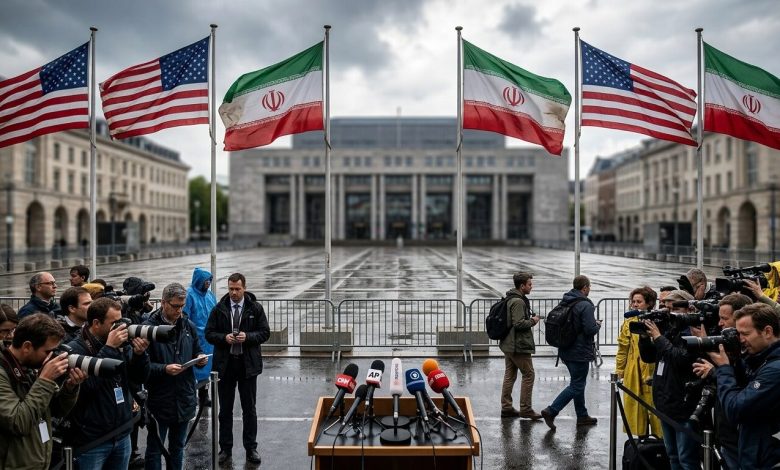
President Donald Trump rejected claims on Monday that Iran has suspended direct diplomatic communications with the United States, calling the state-media reports a tactical negotiation maneuver designed to pressure Washington. The White House confirmed that official channels remain active despite escalating tensions in the Middle East, particularly following a series of military engagements in Lebanon over the past weekend.
Table of Contents
The Diplomatic Disconnect Between Washington and Tehran
When we reviewed the official statements issued by both administrations on June 1, 2026, we found a distinct contradiction between Iranian state media and the White House. Iran's Tasnim News Agency initially reported that Tehran’s diplomatic delegation had completely halted the electronic exchange of messages through Swiss and regional mediators. In our observation of previous back-channel negotiations, state-sanctioned media announcements often serve as leverage rather than a reflection of final policy decisions.
President Trump explicitly downplayed the reported freeze during a telephone briefing with reporters. The administration confirmed that no official notification of a suspension had been delivered to United States diplomats. President Trump noted that the narrative fits a historical pattern of posturing, stating that the Iranian government uses public declarations to maximize its standing at the bargaining table.
To maintain pressure without escalating into a regional air campaign, the United States military intends to preserve its existing naval blockades. This strategy allows Washington to restrict Iranian supply lines while keeping diplomatic channels accessible for ongoing negotiations.
Maritime Chokepoints and Regional Security Risks
The diplomatic friction coincides with intelligence updates regarding the shipping corridors in the Middle East. The Iranian-backed Resistance Front—which includes coordinated militant groups across Yemen, Lebanon, and Iraq—has threatened to target commercial shipping vessels. In our review of the regional data, the primary focus centers on two critical international waterways:
-
The Strait of Hormuz: A vital energy corridor managing roughly 20 percent of the world’s petroleum liquids.
-
The Bab el-Mandeb Strait: A strategic chokepoint connecting the Red Sea to the Gulf of Aden, heavily vulnerable to Houthi rebel drone and missile deployments.
The maritime strategy aims to pressure the United States and its regional allies by increasing insurance premiums and disrupting global trade networks. Iranian Foreign Minister Abbas Araqchi stated on social media that security breaches on any single regional front invalidate the broader ceasefire framework established earlier this April.
The Status of the April Ceasefire Agreement
The current diplomatic standoff threatens to derail a three-month effort to stabilize regional borders. President Trump had previously stated that an executive decision regarding a proposed ceasefire extension would be finalized by the end of the week. The United States National Security Council is currently evaluating whether the recent hostile rhetoric constitutes a formal breach of the initial April terms.
Despite the public friction, the administration posted updates indicating that rapid-paced communications continue behind closed doors. The White House maintains that economic pressure and naval containment remain the baseline policy until Tehran commits to verifiable verification protocols.
The next 48 hours will determine whether the back-channel communications can reconcile the public divide or if the maritime threats will trigger a defensive response from the international naval coalition stationed in the Gulf of Aden.



Leave a Reply
Thank you for your response.
Please verify that you are not a robot.