
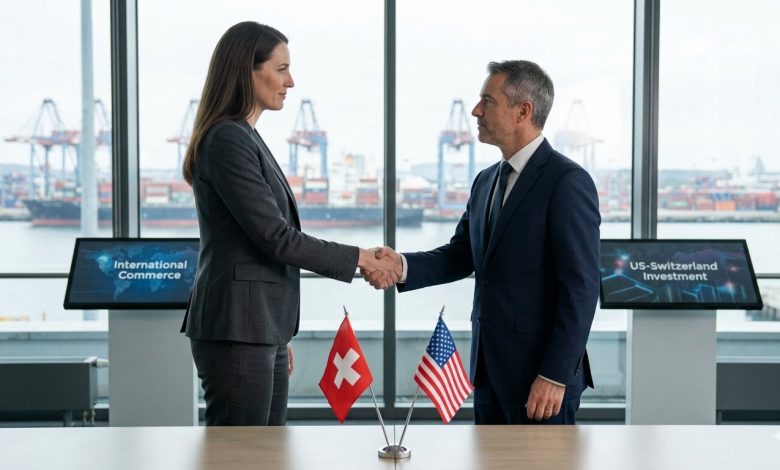
Swiss corporations have invested $27 billion into the United States economy between January and April 2026, fulfilling a bilateral agreement to ramp up capital deployment in exchange for lower U.S. import penalties.
In our observation of recent global trade shifts, this massive capital influx directly stems from a critical November 14 preliminary trade agreement. Under that deal, President Donald Trump reduced punitive tariffs on Swiss goods from 39% down to 15%. In exchange, Switzerland pledged to direct $200 billion in corporate investments into the United States over the next five years.
The initial wave of data shows that Swiss leadership is treating the timeline with immense urgency.
Corporate Capital Floods the U.S. Market
When we reviewed the internal documentation circulating within the Swiss-American Chamber of Commerce, the specific corporate entities driving this $27 billion surge became clear. Major pharmaceutical, logistics, and manufacturing giants are already breaking ground on major physical footprints across multiple states.
The investment surge includes several massive industrial projects:
-
Novartis is launching two major U.S. initiatives, including a cutting-edge biomedical research center in San Diego, California, and an advanced cancer-drug production facility in Texas.
-
Roche is expanding its current manufacturing output and facility footprints in North Carolina.
-
Ypsomed, a major medical technology provider, is constructing a brand-new production factory, also located in North Carolina.
-
Mediterranean Shipping Company (MSC) is building its new North American logistics and cruise operations headquarters in Miami, Florida.
-
Pfiffner Group and Elma are both aggressively expanding their domestic machine tool and electronics production capacities.
"We are model students and we fulfill our promises," stated Swiss-American Chamber of Commerce CEO Rahul Sahgal in a communication to members regarding the data. The early investment velocity indicates Switzerland is pacing ahead of its annualized $40 billion target.
The New Forced Labor Tariff Complication
The trade landscape remains fluid despite the smooth rollout of the initial investment billions. The relationship faces an unexpected hurdle following a recent Washington policy shift regarding global supply chains.
The U.S. government announced fresh tariff penalties aimed at nations deemed to be underperforming in global forced labor eradication. Under these newly implemented rules, Swiss goods face an additional 12.5% tariff burden.
This creates a unique friction point, as the new penalty lands higher than the 10% rate applied to European Union goods. Swiss industrial leaders now have to navigate this secondary regulatory hurdle while actively deploying their promised capital across the American landscape.





Leave a Reply
Thank you for your response.
Please verify that you are not a robot.