
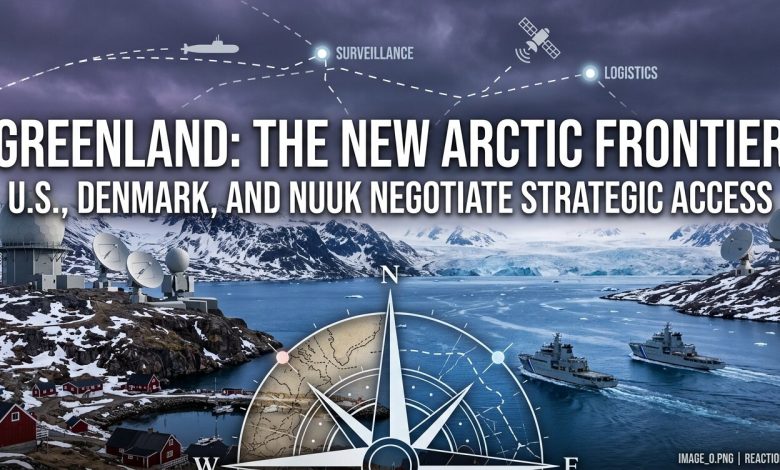
The United States, Denmark, and Greenland are negotiating a compromise to expand the American military and economic footprint in the Arctic without formal annexation.
Table of Contents
The Strategic Shift
In our observation of recent diplomatic developments, the Trump administration has intensified pressure on Copenhagen and Nuuk to secure greater access to the world's largest island. While full territorial acquisition remains highly unlikely, current trilateral talks are pivoting toward a structural compromise. When we reviewed the latest diplomatic briefs, we found that Washington is explicitly leveraging trade and security commitments to achieve de facto operational control over regional defense corridors.
The primary geopolitical driver is the Greenland-Iceland-United Kingdom (GIUK) Gap. This strategic maritime corridor is vital for tracking Russian submarine movements and monitoring expanding Chinese commercial interests in the Arctic, which have accelerated as receding ice opens new transit routes.
Military Expansion and Resource Security
United States Special Envoy Jeff Landry and Ambassador Kenneth Howery recently concluded meetings with Greenlandic Prime Minister Jens-Frederik Nielsen at the Future Greenland conference in Nuuk. While Prime Minister Nielsen stated that there are no indications the White House has abandoned its long-term ambition to control the territory, discussions focused heavily on immediate logistical access.
The Pentagon is currently proposing three new military bases in southern Greenland. These installations would focus on advanced maritime and aerial surveillance to bolster the North American Arctic shield.
Beyond security, Washington is targeting Greenland’s extensive, untapped deposits of critical minerals, including:
-
Rare earth elements essential for manufacturing high-tech defense systems.
-
Uranium deposits critical for future domestic energy resilience.
-
Strategic deep-water ports capable of supporting expanded naval deployments.
Transatlantic Diplomacy and Regional Friction
The current diplomatic push follows severe economic friction earlier this year when the White House threatened punitive tariffs against European nations opposing U.S. regional ambitions. This coercive approach has triggered localized resistance. In Nuuk, public demonstrations have challenged the expanded U.S. presence, with local leadership asserting that the island’s population will not become subjects in a geopolitical standoff.
Securing a negotiated compromise allows the United States to erode Danish administrative relevance in regional defense matters while building vital surveillance infrastructure. This strategic expansion achieves the administration's national security objectives without provoking a severe, long-term fracture within the NATO alliance.





Leave a Reply
Thank you for your response.
Please verify that you are not a robot.