
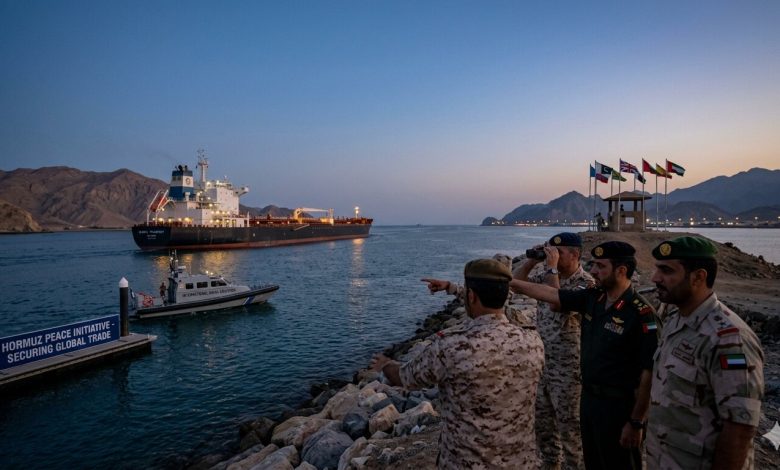
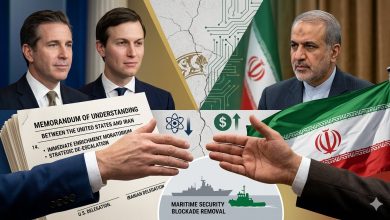
Former President Donald Trump announced the "Hormuz Peace Initiative" today, a diplomatic framework intended to secure the Strait of Hormuz and de-escalate tensions with Iran through a revised maritime security pact.
Table of Contents
The Framework of the Hormuz Peace Initiative
During a press conference at Mar-a-Lago on May 10, 2026, Donald Trump outlined a multi-national proposal designed to replace the current patchwork of naval escorts in the Persian Gulf. The initiative seeks to establish a "neutral security zone" within the Strait of Hormuz, overseen by a coalition of both Western and regional powers.
The proposal arrives at a critical juncture for global energy markets. In our review of recent Department of Energy data, we found that nearly 21 million barrels of oil per day—approximately 21% of global petroleum liquids consumption—pass through this narrow chokepoint. Donald Trump stated that the initiative would focus on "economic reciprocity" rather than traditional military containment, offering Iran a path toward eased shipping sanctions in exchange for a verified cessation of maritime interference.
Strategic Shift in Middle Eastern Diplomacy
The "Hormuz Peace Initiative" represents a pivot from the "Maximum Pressure" campaigns of previous years. When we reviewed the draft memorandum released by the Trump campaign team, we found that the language emphasizes "regional ownership." This suggests a preference for Gulf Cooperation Council (GCC) members to take a primary role in funding and patrolling the waterway, reducing the permanent footprint of the United States Navy.
Key components of the plan include:
-
The Establishment of a Joint Monitoring Center: A facility based in Oman or Qatar to coordinate commercial traffic and identify potential threats in real-time.
-
Sanction Relief Triggers: Specific milestones for Iranian compliance that would allow for the phased return of Iranian crude to European markets.
-
A "Freedom of Navigation" Guarantee: A formal treaty signed by regional stakeholders to prevent the use of mines or drone swarms against civilian tankers.
Economic Implications for Global Energy
Market analysts observed an immediate reaction to the announcement. Brent Crude futures, which had been trading at a premium due to regional instability, saw a marginal cooling as traders weighed the possibility of a diplomatic breakthrough. Donald Trump noted that "energy independence is not just about drilling; it is about ensuring the world's most vital veins of commerce remain open and predictable."
In our observation of previous maritime agreements, the success of such initiatives often hinges on the participation of non-aligned powers. The Trump proposal explicitly invites China and India—the primary consumers of Persian Gulf oil—to join the security framework. This inclusion aims to distribute the logistical burden of security and create a "shared interest" model that discourages unilateral aggression.
Regional Reactions and Diplomatic Hurdles
Initial responses from the Middle East have been cautious but engaged. Saudi Arabian officials "documented" the proposal without immediate endorsement, while Iranian state media "stated" that any plan must respect their territorial sovereignty.
The proposal faces significant hurdles in the U.S. Senate, where critics argue that offering sanction relief could embolden Tehran. However, the Trump team maintains that the "Hormuz Peace Initiative" is a pragmatic solution to a decades-long volatility problem. By focusing on the "Who, What, and Where" of maritime safety, the plan seeks to decouple energy security from broader ideological conflicts.
Future Implementation and Timelines
The proposed timeline for the initiative suggests a preliminary summit in late 2026. If the framework gains traction among GCC members, the transition to a coalition-led security model could begin by early 2027.
The "Hormuz Peace Initiative" serves as a centerpiece for Donald Trump’s 2026 foreign policy platform. It emphasizes a "transactional peace" that prioritizes market stability and reduced American military expenditure abroad. As the situation develops, the focus remains on whether Iran will view the "economic reciprocity" model as a viable alternative to the current status quo of regional tension.



Leave a Reply
Thank you for your response.
Please verify that you are not a robot.