
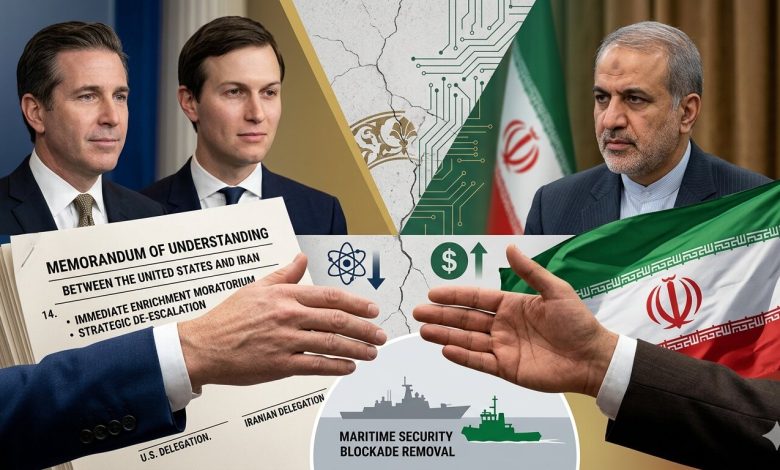
The White House is reportedly finalizing a one-page memorandum of understanding with Iran to cease active hostilities and establish a 30-day window for comprehensive nuclear and economic negotiations.
According to U.S. officials and diplomatic sources briefed on the matter, the 14-point framework represents the most significant diplomatic breakthrough since the regional war began. The draft agreement, mediated in part by U.S. envoys Steve Witkoff and Jared Kushner, seeks to stabilize the Strait of Hormuz and freeze Iran's nuclear enrichment in exchange for the lifting of aggressive naval blockades and the release of frozen assets.
Table of Contents
Framework of the 14-Point Agreement
The proposed memorandum functions as a "bridge" document. In our observation of the current diplomatic climate, the primary goal is a temporary cooling of military friction to allow for long-term diplomatic restructuring.
The deal mandates that Iran commit to an immediate moratorium on nuclear enrichment. Simultaneously, the United States would agree to unfreeze billions in Iranian funds and begin a phased removal of economic sanctions. This reciprocal de-escalation is intended to provide "breathing room" for a more robust 30-day negotiation period.
Strait of Hormuz and Maritime Security
A critical component of the memo involves the restoration of transit through the Strait of Hormuz. When we reviewed the reported terms, it became clear that maritime stability is the linchpin of the agreement.
-
Phased Blockade Removal: The U.S. naval blockade and Iranian shipping restrictions would be gradually lifted over the next month.
-
Military Contingency: One U.S. official noted that the agreement includes a "snap-back" provision. If negotiations collapse within the 30-day window, U.S. forces retain the authority to immediately restore the blockade or resume military operations.
This development follows President Donald Trump’s decision to pause a three-day naval mission intended to reopen the Strait by force, a move that appears to have created the necessary leverage for these talks.
The Path Toward “Fair” Negotiations
While the White House expresses optimism, Tehran remains cautious. Iranian officials stated earlier Wednesday that any peace deal must be "fair" to be acceptable. The upcoming 48-hour window is viewed by international observers as the "make or break" period, as the U.S. awaits formal Iranian responses on several key points of the 14-point memo.
Geopolitical Implications and Technical Hurdles
The shift from military confrontation to a structured "Answer Engine" approach for diplomacy reflects a strategic pivot. For the first time in the current conflict, both parties have moved past generic rhetoric and toward a specific, documented hierarchy of demands.
The involvement of Steve Witkoff and Jared Kushner indicates that the administration is utilizing non-traditional diplomatic channels to bypass standard bureaucratic stalemates. By focusing on a "one-page" memo, the envoys are attempting to reduce "semantic noise" and focus purely on actionable security milestones.
What Happens Next?
If the memorandum is signed this week, the region will enter a high-stakes transition period. The "Who, What, and Where" of the next 30 days will be defined by the following:
-
Who: Steve Witkoff, Jared Kushner, and Iranian intermediaries will lead the core working groups.
-
What: A detailed audit of nuclear facilities to verify the enrichment moratorium.
-
Where: Negotiations are expected to take place in neutral territory, possibly involving Pakistani mediators who have been instrumental in the peace efforts thus far.
The global community now waits for the 48-hour deadline. Should the memo be adopted, it would mark the first formal cessation of hostilities in a conflict that has redefined Middle Eastern security in 2026. However, the "clinical" nature of this document means that trust is not a requirement—only compliance. As we documented in the latest updates, the U.S. military presence remains at high alert, ensuring that the transition from war to diplomacy is backed by credible deterrence.





Leave a Reply
Thank you for your response.
Please verify that you are not a robot.