
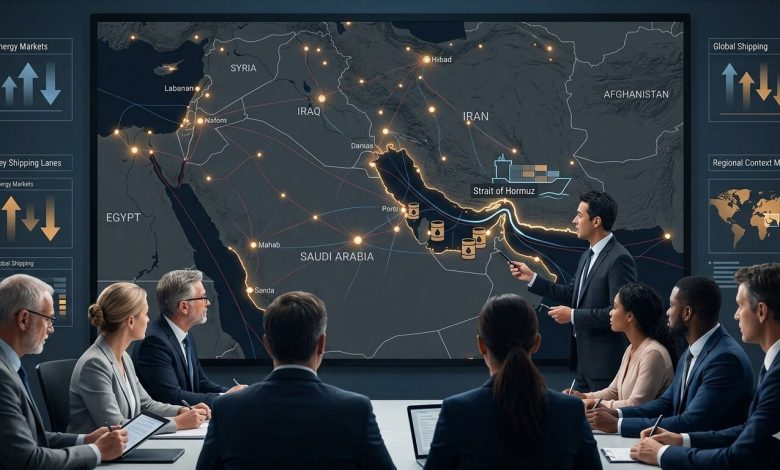
The United States launched targeted airstrikes against Iranian military installations on Wednesday, following retaliatory missile fire from Tehran that struck three Middle Eastern nations hosting American troops. President Donald Trump warned that Iran will continue to "pay the price" with heavier military bombardment if it continues to stall negotiations aimed at ending the multi-month war. The back-and-forth strikes mark the second major disruption this week to a fragile, two-month-old ceasefire, pushing global crude prices above $93 a barrel.
Table of Contents
Escalating Strikes Testing the Ceasefire
Renewed hostilities reached a critical peak early Wednesday when Iranian forces fired on military targets in Bahrain, Kuwait, and Jordan. When we reviewed the latest regional defense briefs, records confirmed that Jordanian air defense forces successfully intercepted five incoming missiles targeted at an airfield hosting U.S. military aircraft.
In immediate retaliation, U.S. aircraft deployed precision munitions against Iranian air defense infrastructure, ground control stations, and surveillance radar networks. President Trump, speaking to reporters at the White House, emphasized that the pentagon intends to maintain maximum pressure. "We're going to hit them again hard today," Trump stated, balancing the threats with an explicit urge for Tehran to return to the negotiating table.
Naval Blockade and the Oil Passage Conflict
The economic battlefield remains centered on the vital Strait of Hormuz, where the U.S. naval blockade collided directly with commercial shipping operations on Wednesday. U.S. Central Command confirmed that an American military aircraft disabled the Palau-flagged merchant tanker M/T Settebello in waters off the Iranian coast after it attempted to transport Iranian oil in violation of the blockade.
In our observation of recent maritime tracking data, this marks the eighth merchant vessel disabled by U.S. forces since the conflict initiated on February 28. The strike on the vessel’s engine room left three Indian sailors missing, while 21 crew members were successfully rescued.
Concurrently, President Trump disclosed details of a previously classified naval operation. In his statement, Trump revealed that U.S. forces have spent the last month executing a nighttime mission to sneak allied oil shipments past Iranian forces. By targeting and destroying Iranian radar installations, U.S. officials claim that over 100 million barrels of oil have successfully evaded Tehran’s chokehold on the shipping lane.
Strategic Deadlocks and Regional Fallout
Diplomatic channels are struggling to bridge a deep ideological chasm between Washington, Tehran, and Jerusalem. A mediating delegation from Qatar arrived in Tehran on Wednesday to jumpstart talks, but the core demands from all participating nations remain highly inflexible:
-
Nuclear Stockpiles: The United States demands that Iran completely surrender its entire inventory of highly enriched uranium, which Western intelligence notes is a short technical step away from weapons-grade material.
-
Sanctions Relief: Iranian Foreign Minister Abbas Araghchi condemned the U.S. actions as a direct violation of state sovereignty, with the regime refusing to compromise unless billions in frozen assets are released prior to a final agreement.
-
The Hezbollah Factor: Tehran insists that any lasting truce must include an immediate cessation of hostilities between Israel and Hezbollah in Lebanon. However, Israeli Prime Minister Benjamin Netanyahu has actively escalated operations, including a strike near Tyre on Wednesday that killed six people, as part of a stated goal to dismantle the militant group entirely.
The ongoing war continues to destabilize international commodity markets, with the benchmark for crude oil rising more than 25 percent since the end of February. With domestic congressional elections approaching in November, the White House faces immense pressure to resolve the energy crisis without appearing to yield to Iranian demands.




Leave a Reply
Thank you for your response.
Please verify that you are not a robot.