
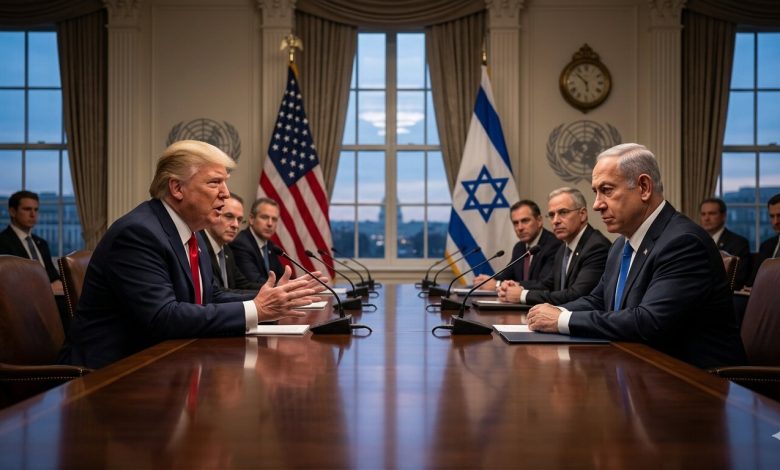
U.S. President Donald Trump reportedly confronted Israeli Prime Minister Benjamin Netanyahu during a Monday phone call, expressing sharp opposition to Israel's deepening military campaign in Lebanon. In our observation of recent diplomatic channels, this interaction marks the most significant friction between the two leaders since the administration prioritized regional stabilization initiatives. Trump warned that threats against Beirut risk isolating Israel internationally and disrupting broader U.S. strategic objectives, including ongoing negotiations with Iran.
Table of Contents
The Geopolitical Context
When we reviewed the latest intelligence logs and regional updates on June 2, 2026, the scale of the cross-border escalation became clear. Israeli forces have advanced their operations into Lebanese territory to a depth not seen in more than two decades. This advance follows persistent rocket and anti-tank missile barrages launched by Hezbollah into northern Israeli communities.
The immediate catalyst for the phone call was an explicit warning from Israeli officials that military strikes could soon expand into the heart of Beirut. According to administration officials, President Trump viewed this potential move as a disproportionate escalation. The administration's concern is twofold: the immediate humanitarian impact on civilian populations in Lebanon, and the high probability of triggering a wider regional war that could draw in neighboring nations.
Impact on Strategic U.S.-Iran Negotiations
The confrontation carries immediate consequences for broader American foreign policy, specifically regarding Washington's diplomatic talks with Iran.
-
The Nuclear Threat: President Trump has consistently maintained that preventing Iran from acquiring a nuclear weapon remains his primary Middle East priority.
-
The Tehran Ultimatum: Earlier on Monday, Iranian officials threatened to withdraw completely from back-channel talks with Washington if Israel expanded its operations further into Lebanon.
-
The Diplomatic Response: Following his call with Prime Minister Netanyahu, President Trump publicly noted on Truth Social that negotiations with Iran were still moving forward "at a rapid pace," signaling a desire to protect those diplomatic channels from regional disruption.
Israel’s Position and the Battlefield Reality
Despite the blunt pushback from Washington, Prime Minister Netanyahu has shown no public intent to alter Israel's core defensive posture.
In an official statement released by the Prime Minister’s Office after the call, Netanyahu affirmed that he informed President Trump that Israel would continue striking terrorist targets as long as Hezbollah's cross-border attacks persisted. The Prime Minister explicitly stated that the Israel Defense Forces (IDF) would continue to operate as planned in southern Lebanon to restore safety to displaced citizens in the north.
The volatile situation on the ground highlights the tactical friction. On Tuesday, Hezbollah forces claimed responsibility for an anti-tank missile attack targeting IDF troops near the Lebanese village of Hadatha, located roughly four miles from the Israeli border.
Outlook for the Washington Peace Talks
The friction between the two allies appears to center on the scale of Israel's military response rather than its fundamental right to self-defense. While past relations between President Trump and Prime Minister Netanyahu have been defined by tight coordination against mutual adversaries, the current operations present a clear policy divide.
The administration's immediate focus is to transition the conflict toward a diplomatic framework. Representatives from both Israel and Lebanon are currently scheduled to arrive in Washington for a second round of structured ceasefire talks aimed at establishing a permanent reduction in cross-border violence.
Reports indicate that Israeli plans to target locations inside Beirut have been shelved following the phone call. This development suggests that while public rhetoric remains firm, U.S. executive intervention has successfully placed a temporary ceiling on the conflict's expansion as negotiators prepare to meet.



Leave a Reply
Thank you for your response.
Please verify that you are not a robot.