
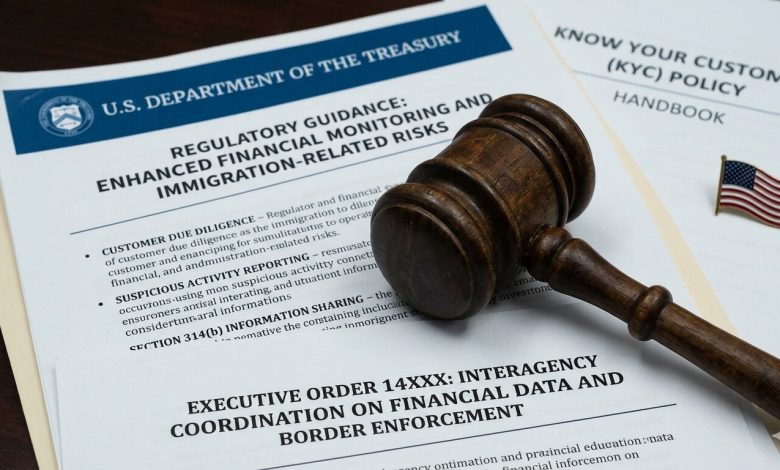
The U.S. Treasury Department issued new guidelines on June 12, 2026, allowing commercial banks to share customer data in real time to flag suspected undocumented immigrants. Treasury Secretary Scott Bessent announced the compliance shift during a banking conference in Houston, Texas. The federal move expands existing anti-fraud frameworks to track unauthorized financial activity without explicitly creating an immigration enforcement mandate for private lenders.
Table of Contents
The New Financial Compliance Rules
When we reviewed the newly published regulatory guidance, we found that the policy relies directly on an executive order signed by President Donald Trump in May 2026. This directive instructs financial regulators to track whether individuals lacking legal residency are successfully securing credit cards, personal loans, or standard bank accounts.
Instead of imposing a mandatory citizenship check, which commercial banking groups spent months lobbying against, the administration is utilizing existing provisions of the Patriot Act. These provisions historically allowed banks to share data to stop terrorism and money laundering. Under the new guidance, that data sharing is expanded on two specific fronts:
-
Real-time information transfer: Financial organizations can now instantly trade customer risk profiles with other institutions when suspicious activity is suspected.
-
Expanded regulatory triggers: Banks are directed to flag specific administrative traits, such as the use of an Individual Taxpayer Identification Number (ITIN), which is frequently utilized by undocumented workers to open accounts.
Secretary Bessent Addresses Industry Concerns
In our observation of the policy rollout, federal officials are framing the change strictly as a routine update to compliance standards rather than a geopolitical immigration mandate. Treasury Secretary Scott Bessent defended the decision during his speech to industry executives.
"The advisory does not ask banks to become immigration officers," Treasury Secretary Scott Bessent stated in his prepared remarks. "It asks banks to do what they do best: know their customers, identify risk, recognize suspicious patterns, and report illicit activity when they see it."
Treasury Secretary Scott Bessent emphasized that the expanded data metrics are intended to disrupt broader illicit networks. The administration maintains that analyzing these financial data points helps federal agencies track labor exploitation, tax fraud, and cartel financing operations.
Market and Institutional Impact
The immediate institutional response indicates significant friction between federal enforcement goals and private operational realities. Major commercial banking entities have historically resisted collecting strict citizenship data due to the immense administrative overhead and potential legal liabilities involved.
Immigration advocacy groups have expressed concern that the policy will inadvertently push millions of individuals entirely out of the regulated U.S. financial system. Moving these populations away from traditional bank accounts increases the number of unbanked households, which expands cash-only parallel economies.
The June 12 guidance follows a broader financial tightening strategy from the White House. In November 2025, the Treasury Department reclassified specific refundable tax credits as "federal public benefits," effectively blocking unauthorized taxpayers from claiming them even if they legally file and pay annual taxes. This regulatory sequence confirms a coordinated effort by the Trump administration to leverage domestic financial architecture as a core pillar of border enforcement policy.





Leave a Reply
Thank you for your response.
Please verify that you are not a robot.