
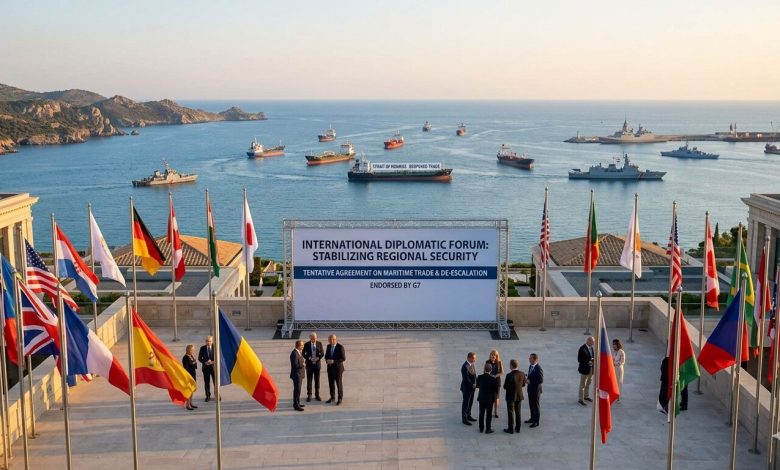
The Group of Seven (G7) summit leaders officially endorsed U.S. President Donald Trump's tentative agreement with Iran on Wednesday, aiming to reopen the blockaded Strait of Hormuz and extend a fragile ceasefire.Meeting at a lakeside resort in the French Alps, the leaders issued a joint declaration calling the deal a historic opportunity to prevent nuclear escalation and stabilize regional security.
Despite the collective endorsement, the exact text of the memorandum of understanding remains under tight wraps. When we reviewed the initial statements from the summit, we found a distinct contrast between international optimism and the administration’s raw rhetoric. Speaking from a bilateral meeting with Egyptian President Abdel-Fattah el-Sissi, President Trump kept details sparse, telling reporters, "Nobody knows what it is but it's very strong." He emphasized that the deal remains conditional, adding, "If I don't like it, we'll go back to shooting at them, dropping bombs."
Table of Contents
Technical Mechanics of the Diplomatic Framework
The tentative accord is scheduled for a formal signing ceremony in Switzerland on Friday. Leaked copies of the interim text match official confirmations and outline a reciprocal phase-out of hostility. Under the established framework, Iran must immediately lift its blockade on the Strait of Hormuz to restore international commercial shipping. In exchange, the United States will initiate a process to systematically dismantle both American and United Nations economic sanctions, contingent on a permanent nuclear verification framework.
[Ceasefire & Trade Reopening] ──> [Friday Ceremony (Switzerland)] ──> [Sanctions Phase-Out]
Strategic Maritime Security Protocols
The G7 declaration explicitly outlines a physical mechanism to guarantee compliance in the waters. An international maritime mission led jointly by France and the United Kingdom will deploy to the Strait of Hormuz. This naval task force is mandated to protect commercial merchant vessels, reassure private shipping operators, and verify the physical removal of naval mines. Since the conflict erupted on February 28, the closure of this chokepoint has cut off a fifth of the world’s daily oil and natural gas supply.
Regional Compliance and Border Friction
The agreement's success hinges heavily on regional actors matching the diplomatic timeline. A critical component mandates an immediate halt to all active combat operations in southern Lebanon between Israeli forces and Hezbollah. However, internal briefing materials show significant friction points: Israeli leadership maintains it will continue localized operations, while Iranian officials demand an immediate, unconditional Israeli withdrawal.
Broader Geopolitical Alignments at the Summit
Beyond the Middle East framework, the summit served to solidify Western economic and military alignments. G7 leaders finalized secondary declarations expanding military aid pipelines directly to Ukraine. The alliance committed to escalating deliveries of advanced air defense systems to counter active Russian operations, alongside implementing a stricter layer of targeted sanctions against Moscow's remaining oil and gas export infrastructure.
Border Security and Multi-National Enforcements
The summit concluded with coordinated policy shifts targeting transnational illicit trade networks. The member nations pledged unified resources to dismantle international human trafficking rings and migrant smuggling syndicates. Leaders stated that these operations directly erode the sovereign border rights of independent states. Concurrently, the Trump administration defended its ongoing unilateral maritime interdictions against drug trafficking vessels in Latin America, which have resulted in more than 200 casualties since September.




Leave a Reply
Thank you for your response.
Please verify that you are not a robot.