
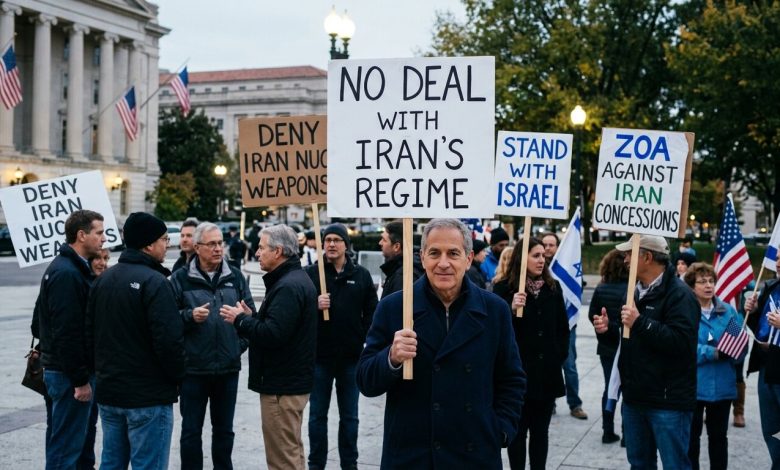
The Zionist Organization of America (ZOA) explicitly criticized the emerging memorandum of understanding between the United States and Iran, designating the initial diplomatic framework as a deeply problematic development. ZOA National President Morton Klein expressed strong concerns on Monday regarding the potential easing of economic blockades without securing immediate, permanent concessions from Tehran.
When we reviewed the statement released by the organization, it became clear that the traditional alignment between certain advocacy groups and the executive branch is experiencing significant friction over foreign policy. While the organization continues to praise President Donald Trump for past military operations that degraded Iranian nuclear capabilities, it rejects the current concessions.
Table of Contents
Analyzing the Terms of the Memorandum
According to official reports, the new memorandum of understanding aims to reopen the critical Strait of Hormuz and decrease broader economic pressure on Tehran. In exchange, the framework initiates a structured series of multi-round negotiations regarding the country's nuclear capability development.
In our observation, this structural approach creates a significant policy departure from previous maximum-pressure campaigns utilized by federal planners. Critics emphasize that the draft framework lacks explicit legal requirements for Iran to instantly dismantle its active nuclear infrastructure or surrender existing stockpiles.
Specific Infrastructure and Stockpile Concerns
ZOA National President Morton Klein documented that allowing the Iranian regime to retain its current ballistic missile arsenal creates an immediate threat to regional stability. He argued that lifting existing shipping blockades before achieving complete disarmament allows the state to rapidly rebuild its domestic economy.
The technical parameters of the memorandum do not explicitly mandate the destruction of existing missile stockpiles during the preliminary phase. Consequently, multiple defense analysts note that regional proxy groups could receive renewed financial and military backing if foreign pressure is eased prematurely.
Political Divergence and Administrative Defense
Vice President JD Vance defended the proposed diplomatic framework during recent media briefings, stating that the long-term strategy will safely neutralize Tehran's nuclear ambitions. The vice president emphasized that structured sanctions relief remains contingent upon the eventual normalization of regional border security.
However, several legislators have publicly challenged the executive branch's optimistic assessment of the ongoing diplomatic negotiations. Florida Senator Rick Scott argued that any formal agreement must permanently terminate the regime's ballistic missile infrastructure and block state-sponsored terrorism.
Congressional Skepticism Spans Party Lines
South Carolina Senator Lindsey Graham expressed parallel concerns that Iranian negotiators may interpret the written memorandum differently than U.S. representatives. This divergence in text interpretation has fueled anxieties within both congressional oversight committees and external advocacy networks.
When we analyzed the tracking data from major political updates this week, we noted that public support for the administration's Middle East strategy has experienced measurable shifts. The ideological divisions surrounding this framework contrast sharply with historical alignments on foreign policy agreements.
Comparative Context with Previous Nuclear Frameworks
The current agreement has created a unique alignment of skepticism that spans across traditionally opposing ideological lines. Unlike the Joint Comprehensive Plan of Action implemented in 2015, which deeply divided American Jewish organizations, the 2026 memorandum faces broad institutional resistance.
Reports from the Jerusalem Post indicate that an array of advocacy groups are actively holding statements until the full text is published. This institutional hesitation reflects a deeper concern regarding verification mechanisms and compliance protocols under international law.
The Economics of Regional Stability
A primary point of contention involves the potential unfreezing of significant state assets currently held in foreign banks. Economists suggest that an influx of capital could quickly stabilize the domestic currency of Iran, insulating the regime from future sanctions.
ZOA National President Morton Klein stated that the global community cannot achieve security while the current leadership structure remains fully intact. The organization continues to lobby congressional offices to demand a total cessation of enrichment activities before any financial relief is authorized.




Leave a Reply
Thank you for your response.
Please verify that you are not a robot.